
Contact Us
Related Posts

Category


Not long ago, performance marketing was all about human intuition, with marketers analyzing spreadsheets, tweaking ad bids, and manually segmenting audiences.
But in 2026, the game has changed for businesses and marketers alike.
Performance marketing has entered a new era where data alone no longer guarantees an edge—intelligent systems do. The integration of AI & automation is reshaping how performance-based campaigns are designed, executed, and scaled.
According to recent industry insights, companies leveraging AI in performance marketing see 20 to 30% higher ROI on campaigns compared to those relying on traditional methods. This clearly indicates that AI and automation technologies are proving helpful in business growth and ensuring consistent campaign performance.
As this adoption accelerates, businesses must understand the importance of AI marketing automation to outperform competitors relying on conventional approaches.
In this blog, we’ll explore exactly how AI and automation are changing performance marketing and how companies of all sizes can adopt them effectively in campaigns. Plus, take a look into the future of performance marketing with some key trends.
Understanding AI & Automation in Performance Marketing
AI & automation in performance marketing refer to the use of intelligent systems and AI-powered tools to analyze data, predict outcomes, and automate repetitive actions. Unlike rule-based tools of the past, modern AI systems continuously learn from user behavior, campaign performance, and market trends to provide real-time insights.
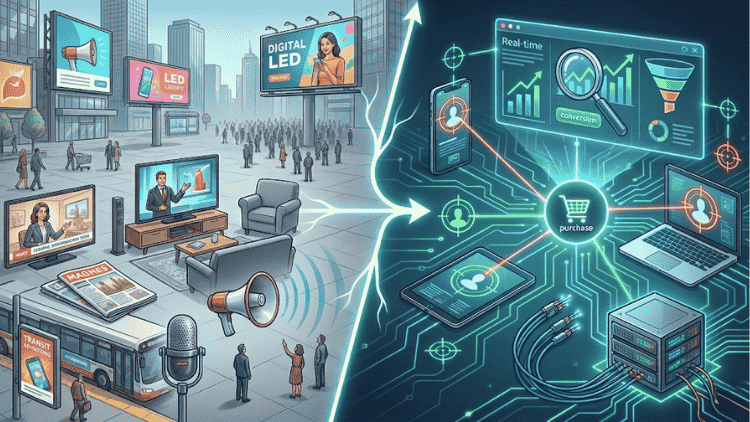
On the other hand, AI-powered automation helps marketers move faster and act smarter by handling complex processes at scale. This capability clearly highlights the difference in performance marketing vs traditional advertising, where campaigns earlier relied on manual intervention, historical data, and generic marketing plans.
How AI & Automation Influence Performance Marketing?
The growing adoption of AI in performance marketing has changed how campaigns are planned, optimized, and scaled. Instead of relying on delayed insights and manual adjustments, marketers can now act on real-time data. This allows campaigns to adapt instantly, leading to more accurate targeting and improved ROI.
Let’s better understand how AI & automation are making a positive impact across the performance marketing landscape;
Smarter Audience Targeting
AI marketing tools help analyze vast datasets to identify high-intent audiences with greater precision. By evaluating user behavior, demographics, interests, and past interactions, campaigns reach users who are more likely to convert. This reduces wasted ad spend and improves conversion rates by focusing on relevant audiences.
Real-Time Campaign Optimization
With AI & automation, performance marketing campaigns are optimized continuously rather than periodically. Algorithms automatically adjust bids, placements, and budgets based on live performance data. This ensures campaigns perform efficiently across platforms, even during peak traffic periods or sudden market changes.
Predictive Performance Insights
AI enables marketers to forecast outcomes before significant investments are made. By identifying patterns in historical and real-time data, predictive models estimate which creatives, channels, or audiences are likely to perform best. This helps marketers make informed decisions and reduce risks associated with their ads.
Personalized Ad Experiences at Scale
Through AI marketing automation, brands can deliver highly personalized ad content to thousands of users simultaneously. AI dynamically adjusts messaging, visuals, and offers based on individual preferences and behavior. Personalization at scale is the key to improving engagement rates and ensuring brands stay relevant to users.
Automated A/B Testing and Creative Optimization
AI simplifies testing by automatically running multiple ad variations and identifying top-performing creatives faster. Instead of manually tracking results, the system shifts spend toward winning combinations. This leads to continuous creative improvement while saving time and ensuring campaigns perform consistently.
Improved Budget Allocation and ROI
By leveraging automation using AI, marketers can allocate budgets more effectively across channels and campaigns. AI monitors performance signals in real time and redistributes spend toward high-performing assets. This ensures marketing investments are always aligned with outcomes, resulting in stronger returns.
How Business Can Integrate AI & Automation in Performance Marketing?
Adopting AI marketing automation allows businesses to move beyond traditional methods and toward smarter, data-driven execution. By integrating AI into performance marketing, companies can improve targeting accuracy, optimize spend, and respond faster to customer behavior while ensuring consistent performance.
The following tips will help businesses integrate AI & automation in their performance marketing campaigns effectively:
Start with Clear Performance Goals
Before implementing AI tools, businesses should define clear objectives such as lead generation, conversions, or customer retention. Well-defined goals help AI systems focus on the right data signals and optimize ad campaigns effectively.
Use AI-Powered Audience Segmentation Tools
With AI & automation, businesses can segment audiences based on behavior, intent, and engagement patterns rather than basic demographics. This enables more accurate targeting, better personalization, and improved campaign relevance.
Integrate AI with Existing Marketing Platforms
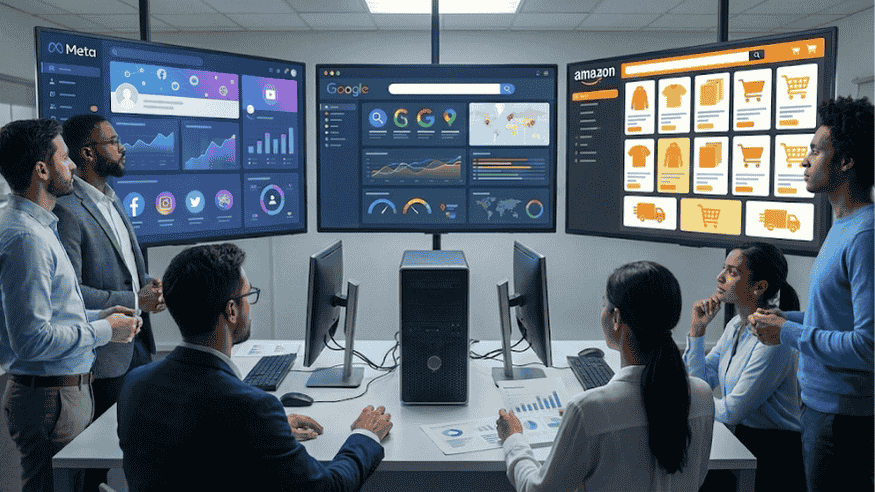
Seamless integration with current platforms like Google Ads, CRMs, and analytics tools ensures smoother adoption. When AI systems work alongside existing tools, businesses gain a unified view of performance data and improve optimization.
Leverage Predictive Analytics for Decision-Making
Using AI in performance marketing, businesses can predict trends, customer actions, and campaign outcomes before investing heavily. Predictive insights support smarter planning, reduce guesswork, and help allocate resources more confidently.
Automate Routine Campaign Tasks
Businesses should begin by automating repetitive tasks such as bid adjustments, reporting, and budget pacing. This reduces manual workload, minimizes errors, and allows marketing teams to focus on more important creative and strategic tasks.
Continuously Monitor and Refine Automation Rules
Even with automation using AI, regular monitoring is essential. Businesses should review outcomes, refine parameters, and update strategies to ensure AI-driven decisions align with evolving goals, market conditions, and customer expectations.
2026 Trends: The Future of AI & Automation in Performance Marketing
In 2026, AI & automation will redefine performance marketing through smarter systems, faster decisions, and deeper personalization. This will help brands to react instantly to data, behavior changes, and market signals across digital platforms.
Some evolving AI and automation trends that will shape the future of performance marketing are as follows:
Fully Autonomous Bidding Systems: AI-driven bidding will become fully autonomous, adjusting budgets, bids, and placements based on real-time data.
AI-Led Creative Intelligence: Creative generation will use AI systems that test, refine, and personalize ad formats dynamically for different audiences at scale.
Predictive Retargeting: Predictive models will improve retargeting in performance marketing by identifying intent signals earlier and triggering timely personalized ads.
Advanced Cross-Channel Attribution: Cross-channel attribution will become more accurate as AI connects touchpoints, measuring impact across customer journeys.
Multi-Model Data Utilization: Voice, visual, and conversational data will increasingly influence campaign optimization, affecting how audiences are engaged.
Responsible and Transparent AI Adoption: Ethical AI adoption and transparency will gain importance, ensuring automated systems remain compliant and trustworthy.
Final Thoughts: AI in Performance Marketing as a Growth Advantage
The adoption of AI & automation has shifted performance marketing from reactive execution to proactive growth planning. Businesses that embrace these technologies gain faster insights, better control over budgets, and improved campaign efficiency. More importantly, automation enables scalability without compromising precision.
Looking ahead, AI in performance marketing will continue to evolve as a strategic growth enabler rather than just a supporting tool. Brands that invest early in an AI-driven performance marketing strategy will benefit from smarter decision-making, deeper personalization, and consistent campaign performance across platforms.