
Contact Us
Related Posts




Categories
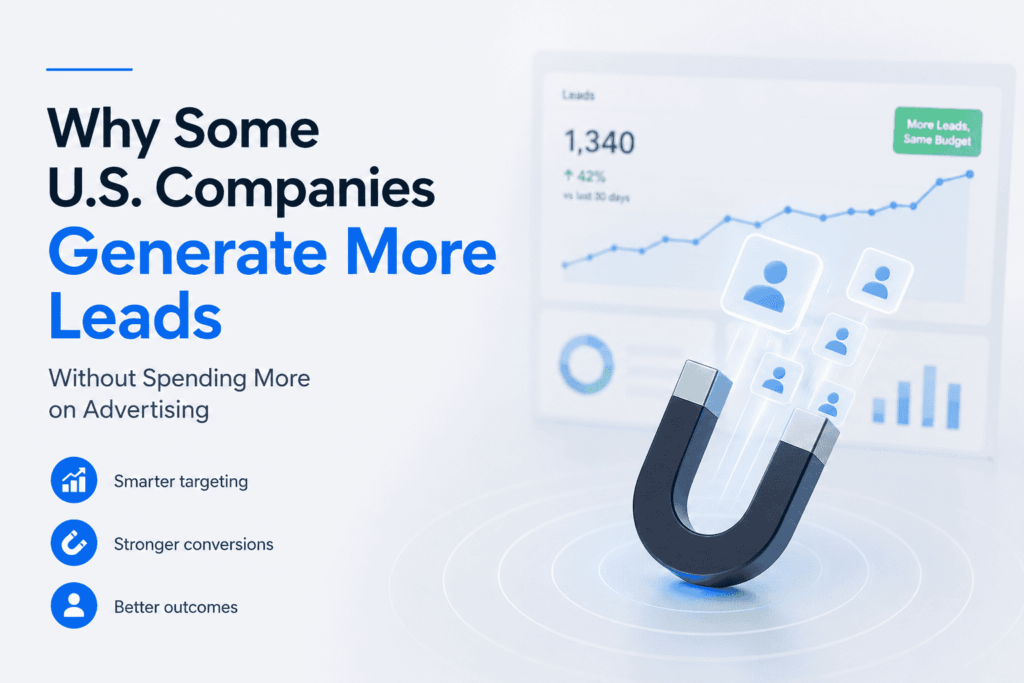


For modern software enterprises, user acquisition is only half the battle. You can deploy the most sophisticated acquisition campaigns across the internet, but if your conversion bucket is leaky, your growth will permanently stall. High user churn is the ultimate silent killer of Monthly Recurring Revenue (MRR). When customer acquisition costs (CAC) continue to climb across digital channels, relying solely on top-of-funnel volume to outpace customer drop-off is an expensive, unsustainable strategy.
True revenue scale happens when optimization moves past simple ad clicks and focuses deeply on the entire user journey. To systematically lower product churn by 30% or more, an organization must align its top-of-funnel marketing promises directly with mid-funnel onboarding experiences and product reality.
1. The Real Relationship Between Marketing Inbound and Product Churn
Many product development teams view churn as a purely engineering or customer success issue. They assume that if an account cancels their subscription, it must be due to a technical bug, a missing product feature, or poor support response times. However, data tells a completely different story: nearly half of all software churn begins directly in the marketing funnel.
[ Misaligned Top-of-Funnel Messaging ]
                 │
                 ▼
[ Wrong Audience / Inflated Product Expectations ]
                 │
                 ▼
[ Friction-Heavy Trial Onboarding ]
                 │
                 ▼
[ High Day-1 & Day-7 Churn Rates ]
When acquisition strategies focus on driving cheap free-trial sign-ups rather than finding qualified, high-intent users, you create an intentional disconnect. Inflated marketing hooks and broad demographic targeting bring in users who lack the budget, technical skill, or actual business pain point required to find value in your software.
When these users log in, reality hits, frustration sets in, and they quickly drop off. By transforming your marketing funnel from a simple lead-catcher into an intentional qualification system, you ensure that every user entering a trial is statistically likely to stick around for the long haul.
2. Top-of-Funnel (TOFU) Qualification: Setting Realistic Expectations
Fixing a retention problem requires auditing the very first touchpoint a prospective customer has with your brand. If your ad campaigns or landing pages promise features that are currently in beta, or use generic copy to appeal to everyone, you are actively inviting churn.
Strict Target Audience Filtering
Instead of optimizing your programmatic and performance ad campaigns for the lowest possible cost-per-click (CPC) or raw lead volume, adjust your audience filters to favor corporate decision-makers. Focus your targeting layers around specific technology stacks, company sizes, and verified job titles.
If your platform is built for mid-market data analyst teams, filtering out early-stage freelance operators prevents low-intent accounts from entering your activation pipeline and skewing your retention metrics.
Intentional Copywriting Clarity
Review your landing pages to make sure feature definitions, pricing tiers, and system limitations are clear and unambiguous. It is far better to generate 400 highly qualified trial sign-ups from users who understand exactly what your platform does than 2,000 low-intent sign-ups who leave within 48 hours because they expected an entirely different set of tools.
3. Middle-of-Funnel (MOFU) Alignment: The Critical “Time to Value” (TTV) Window
The most volatile stage of the entire user lifecycle occurs between the initial account creation and the completion of their first week inside the dashboard. This is where the crucial metric known as Time to Value (TTV) comes into play. TTV measures how long it takes a new user to realize the product’s value proposition.
If a user signs up and is immediately met with an empty dashboard, zero guidance, and a complex setup process, their momentum dies. To bridge this gap, modern software brands rely on specialized external expertise. Partnering with elite saas digital marketing agencies allows companies to design cross-channel marketing automation sequences that support the product onboarding process rather than distracting from it.
Behavior-Triggered Email Workflows
Standard time-based email cadences (such as an automated email sent on Day 1, Day 3, and Day 5) are no longer effective for retention. Your nurturing tracks must change based on what the user is actually doing inside the application.
-
Scenario A: If a user signs up but hasn’t uploaded their initial data set within 24 hours, the funnel should trigger a helpful, step-by-step video guide focusing exclusively on data integration.
-
Scenario B: If a user successfully completes the integration on Day 1, the system should instantly shift to showcase advanced feature workflows, guiding them toward deeper system adoption.
Progressive In-App Milestones
Work closely with your product teams to implement milestone tracking that mirrors your external marketing hooks. If your marketing claims that your tool saves operations managers ten hours a week, your mid-funnel marketing assets and in-app tooltips must actively guide the user to the exact feature that fulfills that specific time-saving promise.
4. Bottom-of-Funnel (BOFU) Friction Reduction: Payment and Plan Optimization
Sometimes, users are highly engaged with a product, but technical or administrative friction causes them to leave during transition periods. Optimizing the bottom of your conversion funnel is one of the fastest ways to hit your 30% retention improvement target.
| Friction Point | Optimization Strategy | Revenue Impact |
|
Involuntary Billing Failures |
Deploy automated dunning systems with smart retries and in-app payment updates. |
Recovers up to 10% of lost card revenue. |
|
Sudden Price Shock |
Introduce transparent usage tracking and grandfathered pricing communications. |
Minimizes abrupt billing cancellations. |
|
Rigid Annual Commits |
Offer flexible hybrid monthly/annual billing paths with upfront value incentives. |
Lowers barriers for cautious mid-market accounts. |
Handling Involuntary Churn
Involuntary churn—where a customer’s subscription cancels due to an expired credit card, failed bank routing, or false fraud alerts—accounts for a significant portion of total revenue loss. Fix this by integrating automated dunning platforms that gracefully retry cards behind the scenes, send pre-expiry alerts, and allow seamless card updates directly within email notifications.
Designing a Helpful Exit Survey
When a user decides to hit the cancel button, your funnel shouldn’t just let them walk away without a word. Use a simple, one-click exit survey to gather qualitative feedback.
If a customer indicates they are leaving because the platform is “too expensive,” automatically offer them a temporary account pause or a down-grade option to a lower-tier plan. This saves the account relationship while keeping their historical configuration data perfectly intact for future upgrades.
5. Post-Conversion Engineering: Turning Users into Long-Term Accounts
True funnel optimization never ends at the point of transaction. To push your product churn down permanently, your ongoing communication strategies must treat existing customers with the same importance as fresh inbound leads.
Value-Driven Expansion Tracking
Consistently showcase the ROI your product provides directly to your account administrators. Monthly summary emails that detail metrics like time saved, files processed, or team members onboarded remind executives of the ongoing value your product brings to their business. When your software is clearly tied to their bottom line, cancelling the subscription ceases to be an option.
Early Warning Risk Tracking
Build monitoring systems to track account health indicators, such as dropping log-in frequencies or a sudden decrease in feature usage. If an enterprise account’s usage drops by 40% over a two-week period, your funnel should automatically flag them as a high-churn risk. This triggers targeted re-engagement campaigns and proactive outreach from your account management team to address problems before they turn into cancellations.
6. The Complete SaaS Retention Optimization Checklist
To successfully execute this funnel overhaul, review and check off the following action items across your digital landscape:
-
Audit Acquisition Channels: Identify and stop spend on ad networks that yield high trial volumes but zero Month-3 retention.
-
Update Onboarding Emails: Transition from generic daily calendars to logic-based, behavior-triggered onboarding templates.
-
Eliminate Signup Friction: Remove unnecessary form fields, complex password rules, and premature credit card requirements from early trial stages.
-
Implement Smart Dunning: Protect your billing architecture with proactive card-recovery automation to end involuntary cancellations.
-
Build Proactive Risk Flags: Set up automated system notifications to detect fading account engagement early.
Ready to Transform Your Growth Architecture?
Optimizing an enterprise marketing pipeline requires deep technical data integration, precise cross-channel asset execution, and a clear understanding of the modern B2B SaaS ecosystem. If your internal teams are bogged down managing day-to-day operations, bringing in dedicated digital architecture specialists can help scale your acquisition metrics safely and efficiently.
Discover how the performance marketing experts at OMR Digital design custom, high-converting digital frameworks engineered specifically to acquire qualified corporate users, maximize lifetime customer value, and eliminate revenue loss across your digital presence.