
Contact Us
Related Posts






Categories

In the last few years, digital advertising has gone through a major shift that has quietly changed how marketers think, plan, and execute campaigns. One of the biggest transformations has been in Google Ads, where manual bidding strategies are steadily being replaced by intelligent, machine-learning-based automation systems. This evolution is not happening randomly – it is a direct response to the rising complexity of user behavior, the explosion of data signals, and the increasing need for real-time decision-making.
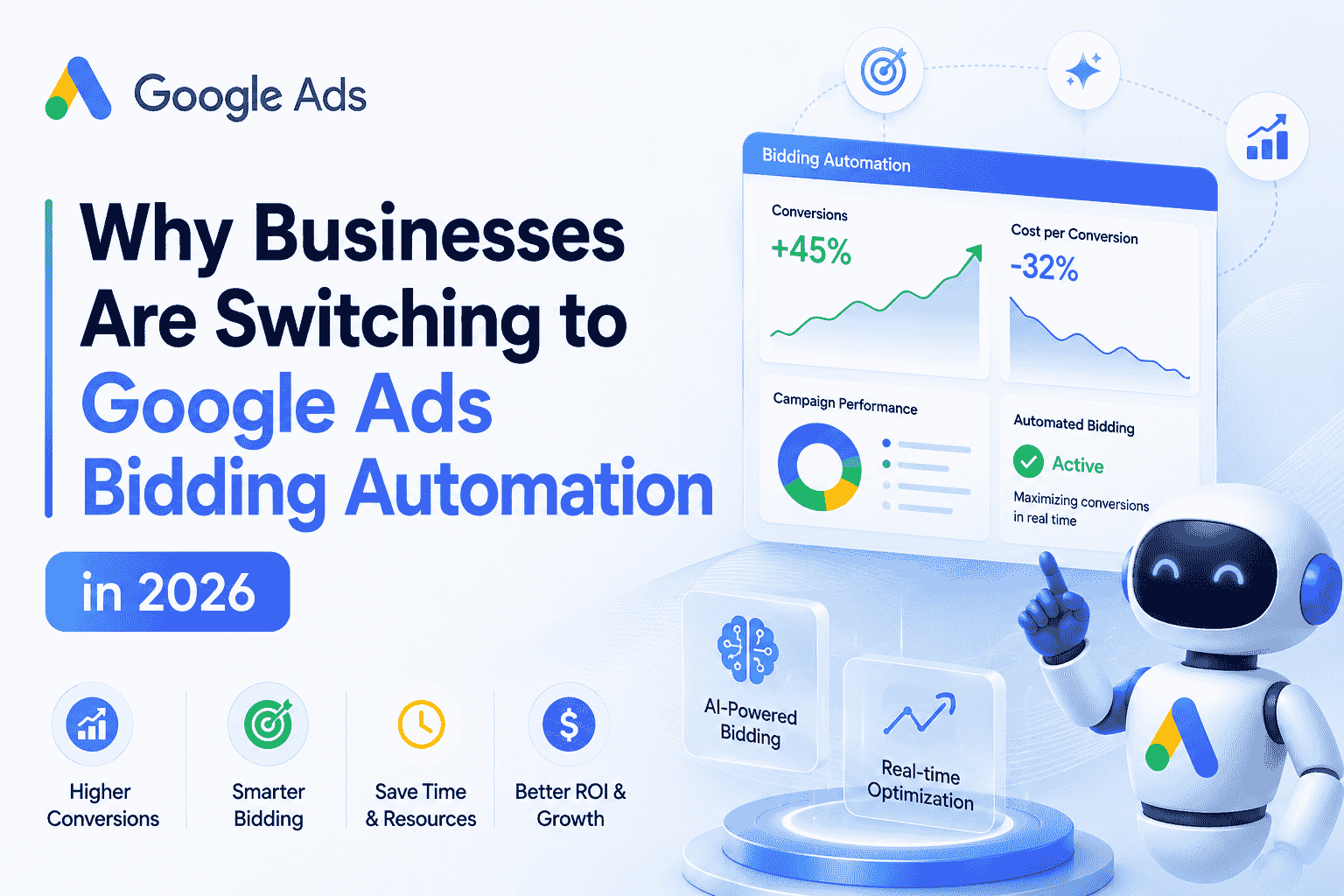
What used to be a highly manual and experience-driven process is now becoming more predictive, adaptive, and automated through Google Ads bidding automation. Instead of advertisers constantly adjusting bids based on assumptions or historical patterns, AI systems now analyze millions of signals in real time to decide the best possible bid for every single auction. This shift is redefining how performance marketing works at its core.
At the center of this transformation is a clear reality – Google Ads is shifting from traditional control-based advertising toward intelligent automation, where machine learning and Google Ads bidding automation play a central role in driving efficiency, accuracy, and scale.
The Growing Complexity Behind Modern Advertising
To understand why automation has taken over, it’s important to first understand how complex digital advertising has become. A few years ago, advertisers mostly relied on a limited set of signals like keywords, location, and device type. Today, the ecosystem has expanded far beyond that.
User behavior now changes based on multiple dynamic factors such as browsing history, purchase intent, time of day, device switching patterns, and even micro-moments in decision-making. At the same time, advertisers are running campaigns across multiple platforms, audiences, and formats simultaneously.
This level of complexity makes manual bidding not just inefficient, but often ineffective. Humans simply cannot process and react to thousands of real-time signals per second. AI, however, can.
Machine learning models continuously learn from user interactions and campaign performance, making automatic adjustments that aim to maximize conversions or return on ad spend. This is one of the key reasons automation has become the backbone of modern Google Ads systems.
How AI Has Redefined Bidding Systems
AI-driven bidding works on a fundamentally different principle compared to manual strategies. Instead of setting fixed bids, advertisers now define a goal – such as conversions, leads, or revenue – and let the system optimize toward that outcome.
The algorithm evaluates multiple real-time signals before every auction, including:
- User intent and search behavior
- Geographic location
- Device type and operating system
- Time of search
- Historical engagement patterns
Based on this, it automatically adjusts bids to increase the likelihood of achieving the desired result.
In industries like e-commerce, this automation becomes even more powerful when combined with structured product campaign setups. Platforms and retailers using Google Shopping Ads Management Services benefit from AI systems that can dynamically prioritize high-performing products, improve visibility in competitive searches, and continuously refine product-level bidding without manual intervention.
This is a major shift from control-based advertising to outcome-based optimization. Instead of managing every detail manually, advertisers now focus on strategy, while AI handles execution at scale.
The Role Of Professional Campaign Management
As automation becomes more advanced, businesses are increasingly relying on expert-driven campaign strategies rather than managing everything in-house. This is where structured campaign planning and optimization support play an important role.
For instance, many brands today depend on Google Ads Management Services to ensure that automation is used effectively rather than blindly. While AI handles bidding decisions, professionals ensure that targeting, creatives, and conversion tracking are properly aligned with business goals.
Without this strategic layer, even the most advanced automation systems can underperform because they depend heavily on the quality of inputs they receive.
Evolution Of PPC In An Automated Ecosystem
The traditional role of pay-per-click advertising has changed significantly. Earlier, PPC experts focused heavily on keyword bidding, manual adjustments, and constant monitoring. Today, the focus has shifted toward strategy, audience segmentation, and creative optimization.
Modern PPC Services are less about micromanaging bids and more about understanding user journeys, improving ad relevance, and maximizing conversion efficiency across multiple touchpoints. This evolution reflects a broader shift in the industry – from operational control to strategic direction.
Why Businesses Are Turning Toward Outsourced Expertise
With automation handling execution, many businesses are realizing that success depends more on strategic interpretation than technical management. As a result, outsourcing has become a practical and scalable solution.
A growing number of companies now rely on Google Ads Outsourcing Services to manage their campaigns. This allows businesses to benefit from expert-level optimization while focusing internally on product development, sales, and customer experience.
Outsourcing also helps brands stay updated with constant platform changes, algorithm updates, and new automation features without needing to build large in-house teams.
The Impact On E-Commerce Advertising
Nowhere is the impact of automation more visible than in e-commerce. Online shopping behavior is fast, competitive, and heavily influenced by timing and relevance. AI plays a crucial role in ensuring that the right products are shown to the right users at the right moment.
Brands investing in Digital Marketing for E-Commerce are increasingly combining automation with data-driven product strategies to improve visibility and conversions. Instead of manually adjusting bids for thousands of products, AI systems optimize performance at scale based on real-time shopping behavior.
At the center of this ecosystem is product-based advertising. Platforms like Google have made it easier for retailers to showcase products directly in search results, where systems continuously optimize listings, pricing visibility, and bidding efficiency through Google Shopping Ads Management Services.
This automation ensures that high-performing products get more visibility while underperforming listings are adjusted or deprioritized automatically.
Automation In B2B Lead Generation
While e-commerce often gets the most attention, automation is equally powerful in B2B industries. The buying cycle may be longer, but the need for precision targeting is even higher.
Businesses focused on Lead Generation for B2B SaaS Companies are using AI-driven campaigns to identify high-intent decision-makers, filter out irrelevant traffic, and improve the quality of leads entering the sales funnel. Instead of relying solely on demographic targeting, machine learning analyzes behavioral patterns that indicate purchase intent.
This helps B2B companies reduce wasted ad spend while improving conversion quality, which is often more important than volume in enterprise sales environments.
Why Strategy Still Matters In An Automated World
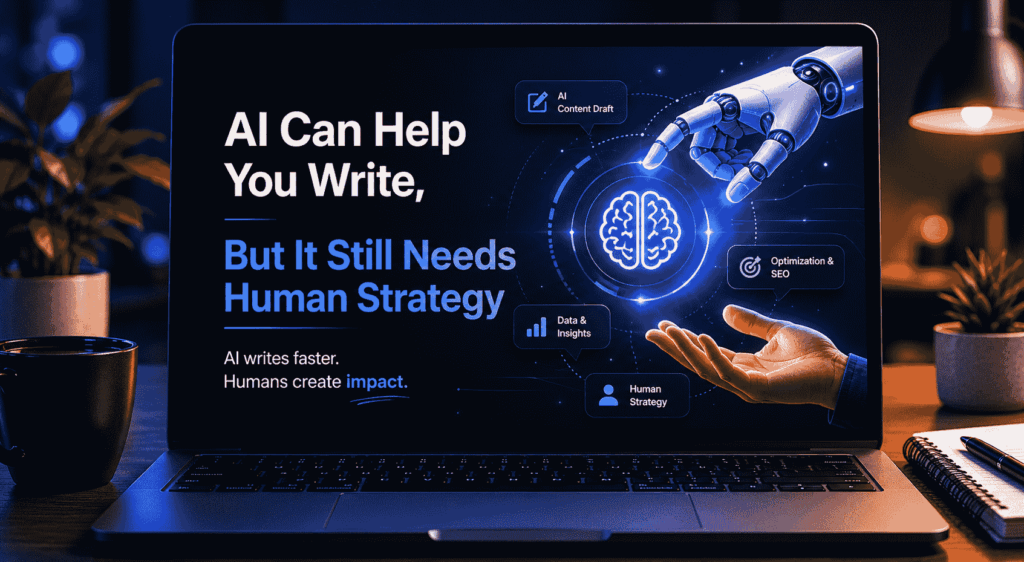
Even though AI handles much of the technical execution, it does not eliminate the need for human involvement. In fact, strategic direction has become more important than ever.
Businesses must still define clear goals, build strong landing pages, create compelling ad creatives, and ensure accurate conversion tracking. Without these elements, automation systems lack the data they need to optimize effectively.
AI is powerful, but it is not independent – it works best when guided by well-structured inputs and business-aligned strategies.
The Changing Role Of Digital Marketers
The rise of automation has significantly changed what it means to be a digital marketer. Instead of focusing on manual tasks, marketers now act more like strategists and analysts.
They interpret data, refine messaging, test creative variations, and ensure that campaigns align with broader business objectives. At the same time, they work closely with automation systems to guide performance in the right direction.
This shift has made the field more strategic and less operational, rewarding those who understand both data and human behavior.
Challenges That Come With Automation
Despite its advantages, automation is not without challenges. One of the biggest concerns is reduced transparency. Many advertisers find it difficult to understand exactly how bidding decisions are being made.
Another challenge is over-reliance on machine learning. If campaign inputs are poorly structured – such as weak creatives, unclear targeting, or inaccurate tracking – automation can optimize in the wrong direction.
This is why continuous monitoring and strategic adjustments remain essential, even in highly automated systems.
The Future Of AI-Driven Advertising
Looking ahead, Google Ads bidding automation will only become more advanced. Systems will continue to evolve toward predictive modeling, where campaigns are optimized not just based on current behavior but also future intent.
This means advertisers will spend even less time on manual execution and more time on strategic planning, brand positioning, and customer experience optimization.
The industry is moving toward a model where AI handles execution through Google Ads bidding automation, while humans define direction. Businesses that adapt early to this structure will likely see stronger long-term performance and scalability.
Conclusion
The transformation in Google Ads is not just a technological upgrade – it represents a complete shift in how digital advertising operates. Manual bidding is gradually being replaced by intelligent systems powered by Google Ads bidding automation that prioritize outcomes over processes. This clearly shows that Google Ads is shifting toward a more automation-driven and performance-focused ecosystem.
While Google Ads bidding automation brings speed, accuracy, and scalability, it also increases the importance of strategy, creativity, and data quality. Businesses that understand this balance will be better positioned to succeed in an increasingly competitive digital landscape.