
Contact Us
Related Posts






Categories

Running Google Ads in 2026 feels very different from even a year ago. Campaigns that once delivered strong leads can suddenly become expensive, inconsistent, and frustrating. Many businesses assume the problem is budget, but in most cases, the real issue is strategy.
Google has changed how campaigns work. Automation is stronger, audience targeting is smarter, and competition is higher across almost every industry. Businesses that continue using old campaign structures often end up paying more for weaker results.
At OMR Digital, we work with businesses that want more than clicks and impressions. They want qualified leads, real conversions, and measurable growth. That is why understanding the latest Google Ads changes is not optional anymore. It is necessary.
Let’s look at what changed in Google Ads in 2026 and how businesses should respond.
Automation Is No Longer Optional
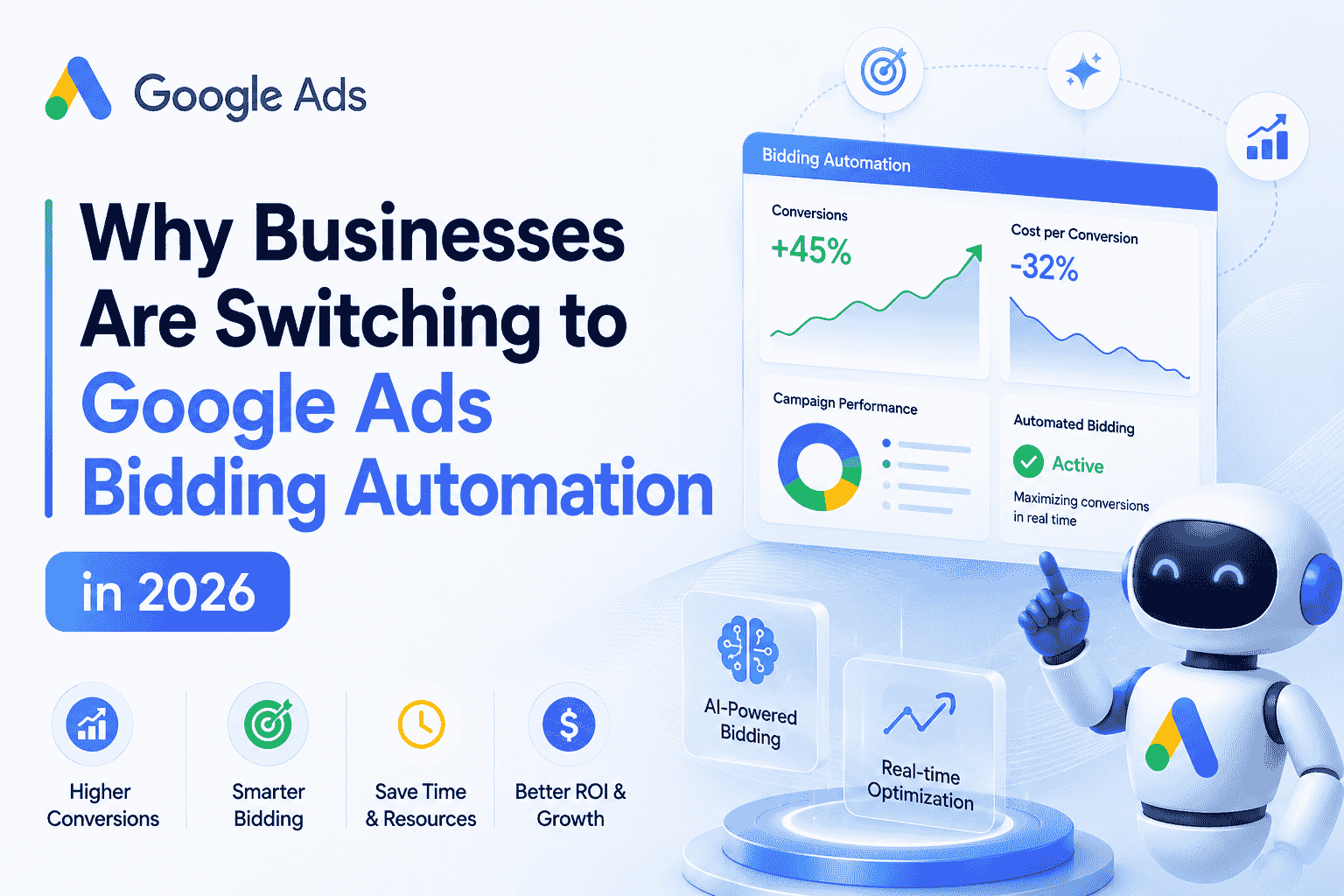
Google is putting much more focus on automation than ever before. Features like Smart Bidding, automated audience targeting, and Performance Max campaigns are no longer extra options you can ignore. They are becoming the core of how campaigns perform.
Many businesses still try to manually control every bid because they believe more control means better results. In reality, manual bidding often struggles against Google’s machine learning systems, which adjust bids in real time using thousands of performance signals.
This does not mean handing over everything to Google without strategy. It means using automation correctly. Strong campaign structure, proper conversion tracking, clear audience signals, and high-quality landing pages are what make automation profitable.
At OMR Digital, our Google Ads Services are designed around this exact approach. We help businesses use automation strategically so campaigns stay profitable instead of becoming expensive guesswork.
Performance Max Is Becoming a Major Growth Channel
Performance Max has become one of the biggest shifts inside Google Ads.
Instead of managing separate campaigns for Search, Display, YouTube, Gmail, and Discover, businesses can now run one campaign that works across all of them. This gives Google more flexibility to find converting users faster.
However, many advertisers launch Performance Max without enough structure. They upload a few headlines, set a budget, and hope results will come automatically. That usually leads to poor-quality leads, wasted spend, and very little visibility into what is actually working.
Performance Max performs best when supported by strong audience signals, clean conversion tracking, high-intent search campaigns, and well-structured creative assets. It should support your strategy, not replace it.
Businesses treating Performance Max like a shortcut usually struggle. Businesses treating it like a system usually scale.
Search Intent Matters More Than Search Volume
One of the most common mistakes businesses still make is chasing high-volume keywords.
More traffic sounds attractive, but traffic does not always mean revenue. Someone searching for general information is very different from someone actively looking to buy.
For example, a person searching “what is CRM software” is likely researching. Someone searching “best CRM software for small business” is much closer to making a purchase decision. The second search is far more valuable even if the search volume is lower.
In 2026, Google Ads rewards businesses that focus on buying intent instead of vanity traffic. High-intent keywords bring better leads, stronger conversion rates, and lower wasted spend.
This is where keyword strategy becomes one of the most profitable parts of campaign planning.
First-Party Data Is Becoming More Valuable
Google is moving further away from third-party data dependency, which makes your own customer data more important than ever.
Your CRM, customer lists, past leads, call tracking, email subscribers, and sales history all help improve campaign targeting. This is called first-party data, and it gives Google clearer signals about who your ideal customers actually are.
When campaigns are connected to real customer behavior, Google can optimize for the right people instead of chasing weak conversions. Businesses using strong CRM integration often see better lead quality because the platform understands what success really looks like.
Many businesses ignore this and only track form submissions. That creates poor optimization because not every form fill becomes real revenue.
At OMR Digital, this is one of the biggest performance gaps we help fix.
Landing Pages Matter More Than Ad Copy
Many businesses spend hours improving ad copy and almost no time improving the landing page.
That creates a serious problem because your ad only gets the click. Your landing page decides whether that click becomes a lead.
If the landing page feels slow, confusing, generic, or untrustworthy, conversions drop quickly. This increases cost per lead and makes campaigns appear weaker than they really are.
A strong landing page should feel like a natural continuation of the ad. It should be fast, clear, trustworthy, and focused on one clear action such as booking a consultation, requesting a quote, or scheduling a demo.
At OMR Digital, we always treat landing pages as part of the ad strategy, not as a separate design task. Because traffic without conversions is just expensive noise.
Quality Score Still Impacts Profit
Some advertisers think Quality Score no longer matters. That is simply not true.
Even in 2026, Quality Score still affects how much you pay for clicks and how often your ads are shown. Weak ad relevance, poor landing page experience, and low click-through rates quietly increase your costs over time.
Many businesses blame high CPC on competition when the real issue is poor campaign quality. Improving Quality Score often creates better profitability without increasing budget.
Sometimes the smartest move is not spending more. It is fixing what is already underperforming.
This is one of the easiest ways to improve ROI without increasing ad spend.
Lead Quality Is More Important Than Lead Quantity
This is one of the biggest mindset shifts happening in performance marketing right now.
Businesses are realizing that more leads do not always mean more revenue. One hundred weak leads are often less valuable than twenty strong ones.
Form fills alone should never be the main success metric. What matters is booked consultations, qualified sales calls, signed clients, and actual business growth.
This is why lead qualification, call tracking, CRM reporting, and sales feedback matter so much. Without these systems, businesses often optimize for cheap leads that never convert.
At OMR Digital, we focus on performance metrics that connect ad spend to real revenue, not vanity numbers that only look good inside reports.
How Businesses Should Adapt in 2026
The best-performing businesses in 2026 are approaching Google Ads very differently. Instead of chasing traffic volume, they focus on search intent and lead quality. They improve landing pages instead of only changing ad copy, and they use CRM data to help Google target the right audiences more effectively.
They also understand that conversion tracking is not just about counting leads. It is about identifying which leads actually become paying customers. This allows better decision-making and stronger profitability over time.
Most importantly, successful businesses treat Google Ads as a complete growth system built for revenue, not just a quick source of traffic. This mindset creates stronger lead pipelines, better ROI, and long-term scalability.
This shift is what separates businesses that grow consistently from businesses that keep restarting campaigns every few months.
Final Thoughts
Google Ads in 2026 is not harder, but it is definitely less forgiving.
Businesses using outdated strategies will continue paying more for weaker results. Businesses that adapt will create stronger lead pipelines, better ROI, and more predictable growth.
The difference is rarely budget. The real difference is strategy.
If you want campaigns that generate real leads instead of just monthly reports, OMR Digital helps businesses build performance-focused systems that turn ad spend into measurable revenue.
Because growth should be planned, tracked, and scalable.