
Contact Us
Related Posts


Categories

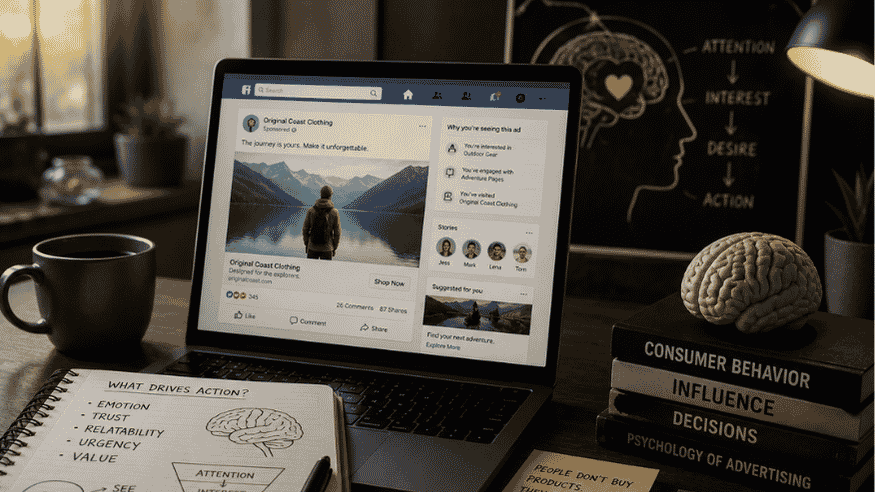
Most people think successful advertising is all about targeting, budgets, or creative design. Those things matter, but they are not the main reason some ads perform better than others.
The real difference often comes down to psychology.
Every day, users scroll through hundreds of posts, reels, videos, and advertisements across platforms owned by Meta Platforms. Most of that content disappears from memory instantly. But occasionally, an ad makes someone stop scrolling, pay attention, and even take action.
That does not happen randomly.
High-converting ads usually understand how people think, react, and make decisions online. They connect emotionally before they try to sell anything.
This is why businesses focusing only on technical setup often struggle while others consistently generate stronger results through Performance Marketing strategies built around audience behavior.
Attention Is the First Battle
Social media moves extremely fast.
Users are scrolling quickly, often without any intention to interact with advertisements. That means the first challenge for any ad is simply getting attention.
Most ads fail here.
People naturally ignore content that looks overly promotional or repetitive. The brain filters information quickly, especially when users recognize something as an advertisement immediately.
This is why curiosity plays such an important role in ad psychology.
Ads that create emotional interruption tend to perform better because they break normal scrolling behavior. That interruption can happen through:
- unexpected visuals
- emotional messaging
- relatable situations
- human expressions
- strong opening hooks
Many successful campaigns connected to Social Media Marketing Services use storytelling and emotional triggers instead of aggressive selling.
People Buy Emotionally First
One of the biggest truths in advertising psychology is that people often make emotional decisions before justifying them logically.
Even when users think they are making rational choices, emotions influence behavior heavily.
- Travel ads create excitement.
- Fitness ads create aspiration.
- Luxury brands create status.
- Financial ads create security.
Every strong advertisement taps into some emotional response.
This is especially important in Meta advertising because platforms like Facebook and Instagram are emotional environments. People are not actively shopping every second. They are consuming content, observing lifestyles, and reacting emotionally to what they see.
That is why emotionally driven campaigns often outperform ads focused only on product features.
Brands using Digital Marketing strategies effectively understand that emotion creates engagement long before conversions happen.
Relatability Creates Trust
Users respond strongly to content that feels familiar.
Highly polished advertisements sometimes perform worse than simple, relatable content because users connect more easily with authenticity.
A casual video, user-generated content, or real customer experience often feels more believable than a heavily produced advertisement.
This psychological response matters because trust is one of the biggest factors influencing conversion behavior online.
People naturally hesitate before clicking ads. They question legitimacy, quality, and intent. But when an advertisement feels relatable and human, resistance becomes lower.
This is one reason why user-generated content and creator-style ads continue performing strongly in modern Meta campaigns.
Social Proof Changes Behavior
Humans are strongly influenced by the behavior of others.
When people see reviews, testimonials, comments, or visible engagement, it creates psychological reassurance. This is known as social proof.
Social proof reduces uncertainty.
If many people appear interested in something, users subconsciously assume there must be value in it.
This is why ads showing:
- customer experiences
- testimonials
- before-and-after results
- real feedback
- community engagement
often generate higher conversion rates.
Businesses focusing on Conversion Rate Optimization frequently use social proof elements because they directly influence trust and decision-making behavior.
Fear of Missing Out Still Works
Fear of missing out, often called FOMO, remains one of the strongest psychological triggers in advertising.
People dislike feeling left behind or missing opportunities others are enjoying.
Limited-time offers, exclusive access, early registrations, or trending products create urgency because users fear losing potential value.
However, modern users are becoming more resistant to fake urgency tactics. Overused countdown timers and exaggerated claims often reduce trust instead of increasing conversions.
The psychology still works, but authenticity matters more now.
The most effective campaigns create urgency naturally rather than forcing it aggressively.
Simplicity Converts Better
Many advertisers try to communicate too much at once.
Too much text, too many messages, or confusing visuals overwhelm users quickly. The brain prefers simplicity because it reduces mental effort.
High-converting Meta ads are often surprisingly simple.
A single message.
A clear emotional direction.
One obvious action.
This clarity helps users process information faster while scrolling.
Businesses investing in Landing Page Development also apply the same principle after the click. Simple user experiences reduce friction and improve conversion rates significantly.
Curiosity Is a Powerful Trigger
Curiosity is one of the strongest attention drivers in social media advertising.
When people feel there is missing information, they naturally want resolution. This psychological effect encourages clicks and engagement.
Ads that hint at:
- hidden insights
- surprising results
- uncommon strategies
- unexpected outcomes
often perform well because they activate curiosity loops.
But curiosity works best when paired with relevance. Misleading clickbait may generate clicks temporarily, but it damages trust and lowers long-term performance.
The best campaigns create genuine curiosity connected to real value.
Visual Psychology Matters More Than Ever
Humans process visuals much faster than text.
This is why design, colors, facial expressions, movement, and composition all influence ad performance psychologically.
- Faces attract attention naturally.
- Movement interrupts scrolling.
- Contrast increases visibility.
- Eye contact builds connection.
Short-form video content performs especially well because it combines visual stimulation with emotional storytelling quickly.
This is one reason reels and short videos dominate modern advertising strategies connected to Instagram Marketing Services.
The visual experience often determines whether users stop scrolling long enough to absorb the message.
Repetition Builds Familiarity
Many businesses expect users to convert after seeing one advertisement.
In reality, people often need repeated exposure before taking action.
Psychologically, familiarity increases trust. When users repeatedly see a brand, it begins feeling more established and credible.
This is why remarketing campaigns work so effectively.
A user may ignore an ad initially, but repeated visibility gradually reduces resistance and increases comfort levels.
Businesses using Meta Ads Services strategically often focus heavily on audience retargeting because repeated exposure strengthens conversion probability over time.
User Behavior Has Changed
Modern audiences are more advertisement-aware than ever before.
People recognize sales tactics quickly. They skip obvious promotions and become skeptical of exaggerated messaging.
This shift has changed how high-performing ads are created.
Today, successful Meta ads often feel less like advertisements and more like:
- stories
- experiences
- recommendations
- entertainment
- educational content
The line between content and advertising continues becoming smaller.
Brands adapting to this behavioral shift are seeing better engagement because their ads feel native to the platform environment.
Personalization Increases Engagement
People respond more strongly when advertisements feel personally relevant.
Meta’s advertising system allows businesses to target users based on:
- interests
- behaviors
- demographics
- engagement patterns
- purchase activity
This level of personalization improves psychological relevance.
Users are more likely to engage with advertisements that reflect their current interests, lifestyle, or problems.
However, personalization works best when combined with authentic messaging. Good targeting alone cannot save weak creative content.
Why Emotional Storytelling Works
Stories activate emotional processing much more effectively than direct selling.
People remember stories because they create connection and imagination. Facts alone rarely create emotional impact.
A strong story helps users visualize themselves inside the experience being presented.
This is why storytelling has become central to modern Content Marketing and social advertising strategies.
Even short-form ads now rely heavily on storytelling structures:
- problem
- emotion
- transformation
- resolution
This format feels natural because humans instinctively respond to narratives.
The Importance of Trust
At the center of every high-converting ad is trust.
Without trust, even the best targeting and visuals fail.
Users constantly evaluate:
- legitimacy
- credibility
- authenticity
- reputation
- transparency
This is why brand consistency matters so much.
Businesses that maintain clear messaging, professional experiences, strong websites, and valuable content usually perform better over time because users feel safer engaging with them.
Advertising psychology is not just about manipulation. It is about understanding human behavior and reducing resistance naturally.
Final Thoughts
The psychology behind meta ads is ultimately about understanding people more than understanding platforms.
Technology, targeting systems, and algorithms continue evolving, but human behavior remains central to advertising performance.
People want:
- emotional connection
- trust
- relevance
- simplicity
- authenticity
The ads performing best in 2026 are not always the loudest or most aggressive. They are the ones that feel human, relatable, and psychologically aligned with how users naturally think and behave online.
Businesses that understand this are not just generating clicks. They are creating stronger engagement, better trust, and more meaningful conversions through advertising that actually connects with people.