
Contact Us
Related Posts







Categories
 How Dental Clinics Can Win the Google Local Pack for "Dentist Near Me"
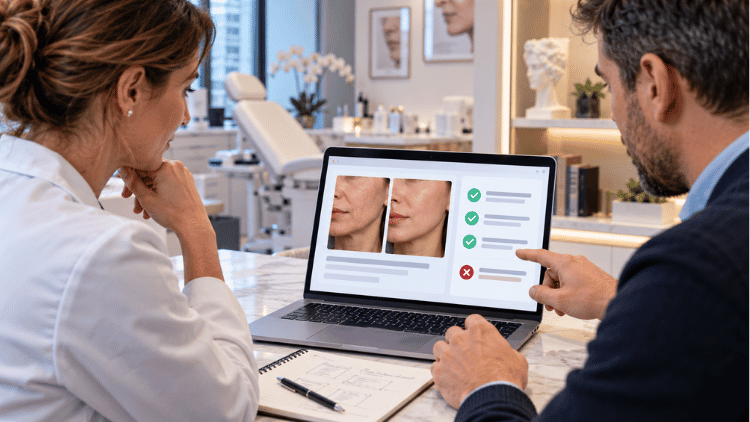
Nothing sells a cosmetic procedure like a real result. Patients want to see what is possible before they book a consultation, and surgeons want to show their work. The problem is that before and after ads for cosmetic surgery sit in one of the most heavily policed corners of online advertising.
Post the wrong image in the wrong place and you can face a rejected ad, a flagged account, or worse, a complaint from a regulator. Post it the right way and you can build trust and fill your consultation calendar.
This guide explains where before/after content is allowed, where it is risky, and how to build a compliant system around it. If you are planning a full patient acquisition strategy, see our overview of digital marketing for cosmetic surgery clinics in the USA.
A note before we start: ad policies change often, and platform enforcement can be inconsistent. This article reflects policy information available in late 2026 and is not legal advice. Always check Meta’s and Google’s current policy pages, and consult your attorney and state medical board rules before publishing patient imagery.
Why Before/After Content Is So Sensitive
Ad platforms and regulators worry about the same things when they look at cosmetic advertising:
- Unrealistic expectations. A single standout result can imply that every patient will look the same.
- Negative self-perception. Ads that make viewers feel bad about their bodies to sell a procedure are restricted on Meta.
- Misleading presentation. Different lighting, angles, poses, filters, or editing between the “before” and “after” can exaggerate results.
- Patient privacy and consent. Medical images are sensitive, and posting them without clear written permission is a legal and ethical risk.
Keep these four concerns in mind. Almost every rejection or complaint traces back to one of them.
What Meta Allows (and What It Doesn’t)
Meta folds cosmetic advertising into its Health and Wellness policy and its personal health and appearance rules. Reporting on the policy page, which Meta last updated in July 2026, indicates the following:
- General cosmetic products, procedures, and surgeries can show before and after transformation, provided the ad targets people aged 18 and over.
- Ads must not generate negative self-perception. Statements that imply someone is inferior because of how they look, or questions that attack a person’s appearance, are not allowed.
- Weight loss products and certain anti-aging or wrinkle treatments are treated more strictly. Several industry sources report that before/after comparisons for these categories remain off limits.
- Personal attributes rules still apply. Copy like “Are you tired of your sagging skin?” implies you know something about the viewer and can be rejected.
Older articles often claim that Meta bans before/after images across the board. That was closer to the truth in earlier years, and some advertisers still see inconsistent enforcement because automated review can treat similar ads differently. Meta’s automated systems also appear to flag images by visual impression, including heavy contrast, harsh lighting, or zoomed-in skin texture that reads as “before versus after.”
Practical takeaways for Meta:
- Set age targeting to 18+ on every cosmetic campaign.
- Frame the creative around confidence, natural-looking outcomes, and the consultation, not insecurity.
- Use consistent lighting and angles, and avoid filters or retouching.
- If the procedure is a wrinkle or anti-aging treatment, assume before/after in the ad itself is risky and use other creative.
- Keep a written checklist and a record of each approved ad. If an ad is rejected, request a review and adjust rather than resubmitting the same image repeatedly.
What Google Ads Allows (and What It Doesn’t)
Google is generally more conservative about before/after imagery in the ads themselves. Sources that track Google’s healthcare and cosmetic advertising rules tend to agree on a few points:
- Cosmetic and elective procedures are advertised under Google’s general rules and are not treated like prescription drug services, so they do not require the healthcare certification that pharmacies and drug services need.
- Before and after comparison images in ad creative are widely reported as restricted for cosmetic procedures, weight loss, and similar categories, even when the photos are genuine.
- Landing pages are reviewed too. Before/after galleries are commonly accepted on a clinic’s own pages when they are accompanied by clear disclaimers, but misleading claims can still cause disapprovals.
- Outcome guarantees and language such as “permanent results” or “look 20 years younger” are high risk.
- Google removed its older restriction that treated some mature cosmetic procedures, such as breast augmentation, under its sexual content policy, effective in September 2025. That makes it easier to advertise those procedures, though sexualized imagery is still not allowed.
Because Google’s rules are applied differently across ad formats, the safest approach is to keep before/after photos off search, display, and Performance Max assets, and show them on your landing page instead, with proper context.
If you want help setting up compliant Google campaigns, our PPC advertising for dental clinics page shows the kind of healthcare account structure we build for regulated clinics, and our guide on how Google Ads works for small businesses on a budget covers the fundamentals.
The Regulators Matter as Much as the Platforms
Even if Meta or Google approves an ad, it can still be a problem under advertising law and medical board rules.
The Federal Trade Commission treats advertising as deceptive if before/after images create a misleading impression about what patients can expect. Many state medical boards add their own requirements about testimonials, results claims, and disclosures. California and a few other states are known for stricter rules, so check your state’s requirements.
At a minimum, a defensible approach includes:
- Written, specific patient consent for use of each image, covering where it will be published (website, social media, paid ads).
- Typical results disclosure. If your featured result is unusual, say so. “Individual results vary” is the bare minimum; being specific about typical outcomes is better.
- Standardized photography. Same lighting, background, pose, and camera distance for both photos, taken by the clinic.
- No misleading edits. Do not retouch, filter, or crop to flatter the “after.”
- Honest timing. State when the “after” photo was taken, since swelling and healing change appearance for months.
- No stock or borrowed images. Only show your own patients’ work.
Where Before/After Content Works Best
If ads are restricted, where should you use your results? Plenty of places.
Your website
A well-organized results gallery by procedure is one of the most persuasive pages on a surgeon’s site. Group results by procedure, show several patients rather than one star case, add the disclaimers above, and include a short note on the procedure, recovery, and who the patient was. This is also where your landing page for paid traffic can send people after they click.
Organic social posts
Organic posts are not subject to ad review in the same way, though Meta’s community standards and your regulators still apply. Carousels showing a procedure’s results, with consent, work well. Reels that walk through a consultation or recovery story often outperform static comparisons. See single images vs carousel posts vs reels for what tends to perform.
Email and consultation follow-up
People who have already requested information are an ideal audience for result galleries. Send them a curated set relevant to the procedure they asked about.
Google Business Profile
Add clinic photos and real, consented images that fit Google’s photo guidelines, and keep them current. For tactics that help clinics get found locally, our guide on how to bring your website to the top of Google for medical clinics covers local visibility in more depth.
Ad Creative That Performs Without a Side-by-Side
You can still make strong ads without a before/after image. Options that regularly pass review and still convert:
- Surgeon introduction videos. A calm, 30-second explanation of who you treat and how you work builds trust.
- Consultation walkthroughs. Show the clinic, the staff, and what happens in the first visit.
- Patient stories with consent. Real patients talking about their experience, framed around confidence and care, not flaws.
- Educational content. Answers to questions like recovery time or candidacy, which attract serious patients.
- Credential-led creative. Board certification, hospital affiliations, and years of experience matter to cosmetic patients.
- A direct call to action. “Book a consultation” performs better than vague branding, as we explain in why a call-now CTA works better than learn more.
This approach lines up with what works in Meta advertising today. Our article on the psychology behind high-converting Meta ads goes deeper on why trust-building creative tends to beat shock or comparison, and how advertising on Meta works for businesses is a useful primer if you are new to the platform.
User-generated style content can also work for brands that have patient permission; see why UGC is replacing traditional photoshoots for how brands use it.
A Simple Compliance Checklist Before You Publish
Run every before/after asset through this list:
- Do we have written consent that covers this specific use?
- Are the lighting, angle, and pose consistent between photos?
- Is the image unedited and from our own patient?
- Does the caption or landing page include a clear results disclaimer?
- Does the ad avoid guarantees, “permanent” claims, and appearance-shaming language?
- Is the campaign targeted to adults 18 and over?
- Does the procedure fall into a stricter category on the platform (wrinkle treatment, weight loss)?
- Have our attorney or compliance advisor approved the content?
- Have we saved screenshots of the ad, approval, and consent for our records?
If any answer is “no” or “not sure,” keep the image off paid placements and use it only where you are confident it is compliant.
What to Do If an Ad Gets Rejected
Do not panic, and do not keep resubmitting the same ad. Read the exact policy cited, remove the likely trigger (often the side-by-side image, a claim, or the targeting), and submit a revised version. If you believe the rejection was a mistake, use the platform’s review option and explain how the ad meets the policy. Repeated violations can put the whole account at risk, so it is worth being careful. Most healthcare policy issues give advertisers some warning before suspension, but severe violations may not.
The Bottom Line
Before and after ads for cosmetic surgery are not off limits everywhere, but they are high risk in paid placements, especially on Google and in sensitive categories on Meta. The safest and often most effective strategy is to keep your best results on your website and organic channels, use consent-backed and standardized photography, and let your ads lead with credentials, education, and the consultation.
If you would like help building compliant campaigns that still bring in qualified consultations, explore our digital marketing for cosmetic surgery clinics in the USA service.