
Contact Us
Related Posts




Categories

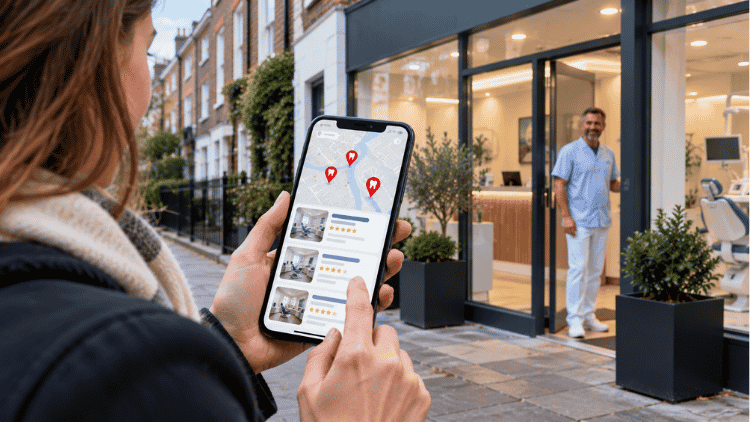
When someone has a toothache on a Tuesday night, they do not scroll through ten pages of results. They type “dentist near me,” glance at the three businesses in the map section at the top, and call one of them. If your practice is not in that group, you may as well not exist for that patient.
That block is called the local pack, and for a dental clinic it is some of the most valuable real estate on the internet. This guide explains how Google decides who appears there for “dentist near me” searches, and what you can do, step by step, to earn a spot.
For a broader overview, you can also read our step-by-step guide to SEO for dental clinics, and see how we support practices through SEO for dental clinics in the USA.
What the Local Pack Is and Why It Matters
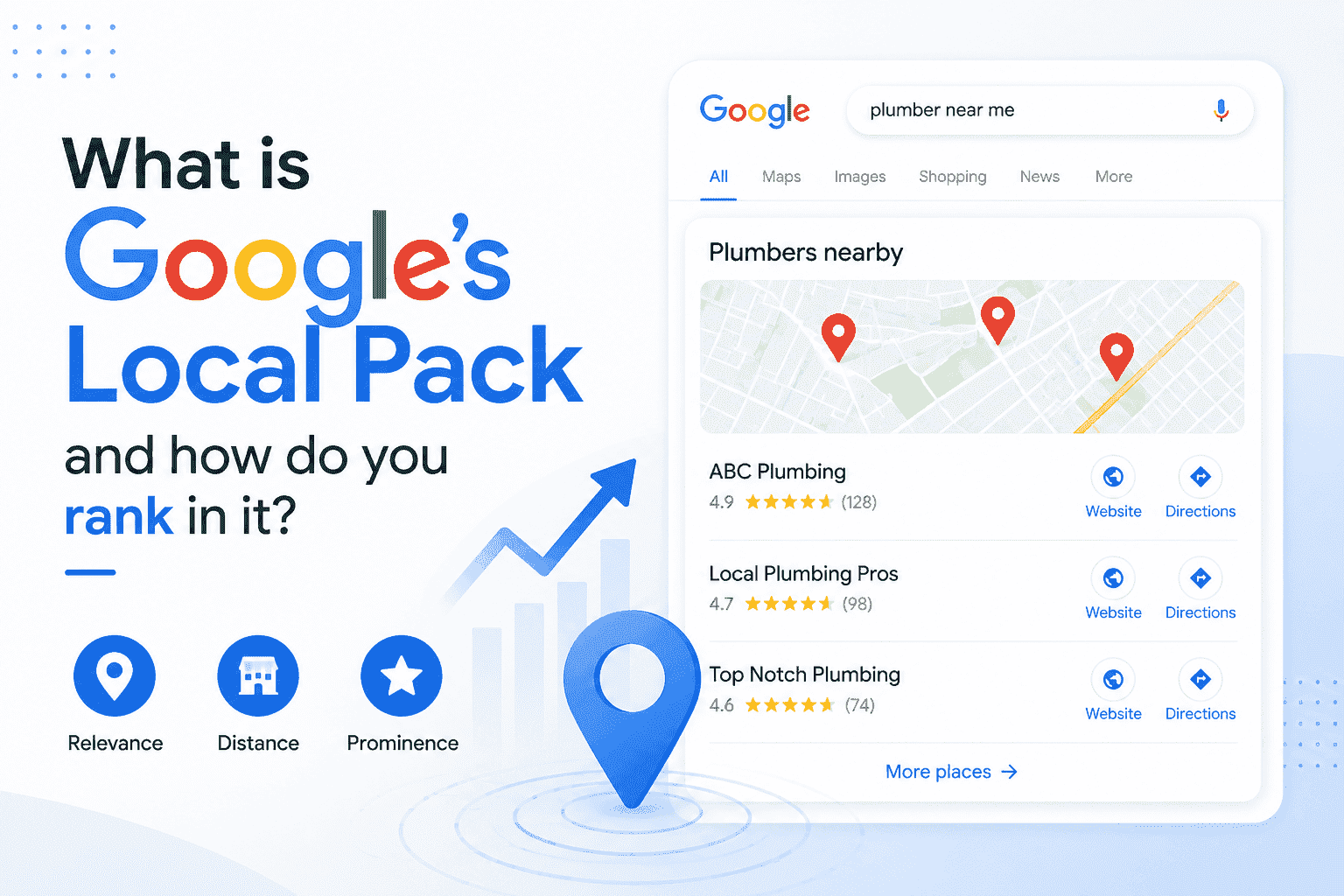
The local pack, also called the map pack, is the group of three business listings with a map that Google shows for searches with local intent, such as “dentist near me,” “emergency dentist,” or “dentist in Austin.” It usually appears above regular organic results.
Patients who click these listings tend to be ready to act. They are looking for an appointment, a phone number, or directions, not information. That is why a strong local pack presence often brings more new patient calls than any other organic source.
If you need a refresher on how local search works in general, our posts on what Google’s local pack is and how to rank in it and the difference between SEO and local SEO are good starting points.
How Google Decides Who Appears: Relevance, Distance, Prominence
Google says local results are based primarily on three factors:
- Relevance: How well your Business Profile matches what the person searched for.
- Distance: How far your practice is from the searcher, or from the location named in the search.
- Prominence: How well known and trusted your practice appears, based on reviews, links, mentions, and overall web presence.
You cannot change your address for the sake of a keyword, so distance is largely fixed. That leaves relevance and prominence as the areas where you can compete. Many local SEO experts describe it this way: relevance gets you considered, distance limits who sees you, and prominence decides who wins.
Industry surveys of local SEO professionals, such as Whitespark’s annual Local Search Ranking Factors study, estimate that Google Business Profile signals carry the largest share of local pack weight (around a third), followed by review signals and on-page factors. Exact percentages are estimates because Google does not publish its algorithm, but the pattern is consistent: start with your Business Profile.
One Important Point About “Near Me”
You cannot really optimize a page for the phrase “near me.” Google interprets those searches using the searcher’s location, so there is no single “dentist near me” page to build. Instead, you win those searches by being the most relevant and prominent dental practice in the area around where people are searching. Everything below is aimed at that goal.
Step 1: Build and Optimize Your Google Business Profile
Your Google Business Profile (GBP) is the single most important asset for local pack rankings. Treat it like a landing page that never stops working.
Choose the right primary category. For most practices, “Dentist” is the right choice. A general practice should not choose “Cosmetic dentist” as primary if most of its patients come for general care. The primary category is widely regarded as one of the strongest relevance signals, so choose carefully. Add secondary categories that truly apply, such as “Emergency dental service” or “Orthodontist,” only if you offer those services.
Fill in every field. Business name (exactly as it appears on your signage, with no keyword stuffing), address, phone number, website, hours, appointment link, services, attributes, and a clear business description.
Add your services. List every service you provide, from cleanings and fillings to implants, Invisalign, and emergency care, with short, plain descriptions.
Keep hours accurate. Include holiday hours, and make sure emergency or after-hours availability is clear if you offer it. People searching at night are often the most motivated patients.
Upload real photos regularly. Include the exterior, entrance, waiting room, treatment rooms, team members, and equipment. Real, recent photos build trust and help patients recognize your office.
Post updates. Offers, new services, and practice news give Google fresh activity and give patients a reason to click.
Answer questions and use messaging if you can respond quickly. Fast replies signal a responsive practice.
For a deeper look at maps-based visibility, see how local service businesses can dominate Google Maps.
Step 2: Earn and Manage Reviews
Reviews influence both rankings and patient decisions. Google looks at the number of reviews, how recently they were left, your overall rating, and whether you respond. Patients, in turn, use reviews as the main trust filter when choosing a dentist from the map.
Ask consistently. The best time is right after a positive appointment. Send a text or email with a direct link to your review page, or place a QR code at the front desk. Make it part of the checkout routine.
Aim for a steady flow, not a one-time burst. A practice that collects a few reviews every week looks healthier than one that gets 50 in a month and then none.
Respond to every review. Thank patients who leave positive feedback, and respond calmly and professionally to negative ones, without sharing any patient health information. Public responses show future patients how you treat people.
Never buy or fake reviews. Google can remove them and penalize your listing, and in the United States deceptive reviews can create legal exposure.
Keep the HIPAA rules in mind. When responding, do not confirm that someone is a patient or reveal treatment details. A short, neutral reply that invites them to contact you offline is safest.
Step 3: Make Your Website Reinforce Your Location
Your website supports your Business Profile. Google wants to see that both agree about who you are, what you do, and where you are.
Create dedicated service pages. Separate pages for general dentistry, emergency dentistry, dental implants, teeth whitening, and orthodontics help you match specific searches. Each page should explain the treatment, who it is for, what to expect, and how to book.
Add location signals. Put your full address, phone number, embedded map, and service area on your site. If you serve several neighborhoods or nearby towns, create useful pages for each one, but make them genuinely helpful rather than copied with the city name swapped. Our guide to local SEO for multi-location businesses explains how to do this without creating thin pages.
Use local business schema. Structured data for a dental practice (including address, hours, and services) helps search engines understand your page. Our post on scaling schema markup explains what to know before you start.
Make the site fast and mobile friendly. Most “dentist near me” searches happen on phones. Slow pages lose patients. See how to improve Google PageSpeed score without losing design quality and what mobile-first indexing means for your website.
Put the phone number and booking button where thumbs can reach them. A visible click-to-call button on every page turns local visibility into appointments.
Step 4: Keep Your NAP Consistent Across the Web
NAP stands for name, address, and phone number. Google cross-checks this information across directories and websites, and inconsistencies reduce its confidence in your listing.
- Use the exact same business name, address format, and phone number everywhere.
- Claim and update key listings such as Apple Maps, Bing Places, Yelp, Healthgrades, and Facebook.
- Include trusted dental and healthcare directories, plus your local chamber of commerce.
- Fix duplicate listings and old addresses if you have moved or rebranded.
Citation work is not glamorous, but it is the foundation that supports your prominence.
Step 5: Build Local Prominence
Prominence is about how well known and respected you are, online and offline.
Earn local links and mentions. Sponsor a local school team, host a free dental screening day, or partner with nearby businesses and charities, then make sure the resulting coverage links to your site. Our guide on how brand mentions and backlinks work in AI-driven search explains why mentions now matter beyond classic backlinks.
Publish useful local content. Articles that answer patient questions, such as what to do in a dental emergency or what to expect from a first visit, help you attract nearby patients and demonstrate expertise. For ideas on content that earns trust, see why informational content alone isn’t enough to get clients.
Use your brand across channels. A consistent presence on social media, video, and community sites adds to how Google perceives your practice.
Step 6: Track What’s Working
Ranking in the local pack is not a “set it and forget it” project. Review these regularly:
- Calls, website clicks, and direction requests from your Business Profile insights.
- Rankings for important searches across different parts of your service area, using a local grid tracker. Remember that your position can differ from one street to the next.
- Review volume, rating, and response times.
- New patient bookings by source, so you know what is driving real appointments.
If Google Business Profile data ever looks delayed or incomplete, check before panicking; we covered one such case in our note on Google My Business insights data delays.
Local Pack and Paid Ads Work Better Together
Organic and map rankings take time. While you build them, paid search can fill the gap for high-intent terms like “emergency dentist” and “dentist open now.” Over time, the two reinforce each other: more visibility leads to more clicks and reviews, which improve rankings. Our service page on PPC advertising for dental clinics explains how to structure those campaigns, and how long SEO takes to show results can help you set realistic expectations.
Common Mistakes to Avoid
- Keyword stuffing your business name. Adding “Best Dentist Near Me” to the name violates Google’s guidelines and can get your listing suspended.
- Using a virtual office or P.O. box. Google requires a real, staffed location for service area and storefront listings.
- Ignoring reviews or responding badly. Defensive replies cost more patients than the original complaint.
- Duplicate or abandoned listings. These confuse Google and patients.
- Creating dozens of near-identical city pages. Thin pages rarely rank and can hurt quality.
- Setting the wrong primary category. This is easy to fix and often overlooked.
The Bottom Line
Winning the local pack for “dentist near me” is the result of several things working together: a complete and accurate Google Business Profile, a steady stream of genuine reviews, a website with clear service and location signals, consistent listings across the web, and growing local prominence. Distance is outside your control, but relevance and prominence are not.
If you would like a team to handle the details, our SEO for dental clinics in the USA service covers Business Profile management, local content, reviews, and reporting, so your practice shows up when nearby patients are ready to book.