
Contact Us
Related Posts














































Categories
If you’re trying to grow your business online, understanding the difference between SEO and local SEO is one of the most important decisions you’ll make. Many business owners invest in digital marketing without realizing that these two strategies serve different purposes. Choosing the wrong approach can result in attracting the wrong audience, wasting marketing budgets, and missing valuable business opportunities.
Whether you own a local service business, a retail store, a healthcare practice, or an online company, knowing when to focus on SEO Services versus a location-based strategy can significantly impact your online visibility and lead generation. The good news is that once you understand how each works, selecting the right strategy becomes much easier.
Understanding the Difference Between SEO and Local SEO
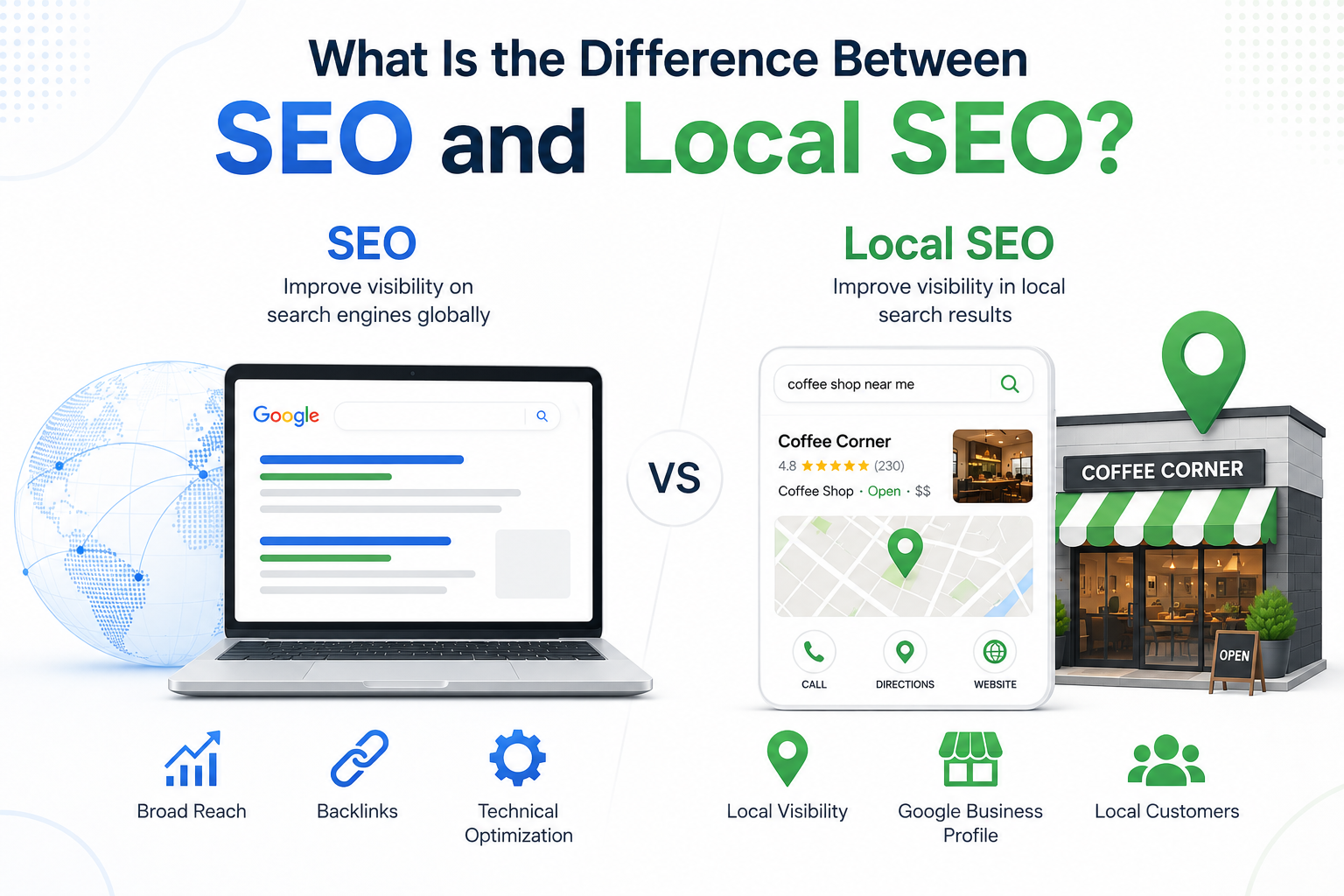
The difference between SEO and local SEO comes down to who you’re trying to reach and where your customers are located.
SEO focuses on improving your website’s visibility for users searching nationally or globally. It helps businesses rank for industry-related keywords regardless of the searcher’s physical location.
Local SEO, however, is designed to help businesses appear in searches made by people within a specific geographic area. Instead of competing with every business nationwide, local optimization helps you connect with nearby customers who are actively looking for your products or services.
While both strategies aim to improve search visibility, their goals, ranking factors, and optimization techniques are quite different.
What Is SEO?
Search Engine Optimization (SEO) is the process of improving your website so that search engines can better understand, index, and rank your pages for relevant search queries.
The objective is to attract qualified visitors by creating valuable content, improving technical website performance, building authority through backlinks, and delivering an excellent user experience.
SEO works particularly well for businesses that serve customers across multiple cities, states, or even countries. Examples include software companies, eCommerce stores, online consultants, educational platforms, and national brands.
Rather than focusing on a physical location, SEO prioritizes relevance, authority, expertise, and content quality.
What Is Local SEO?
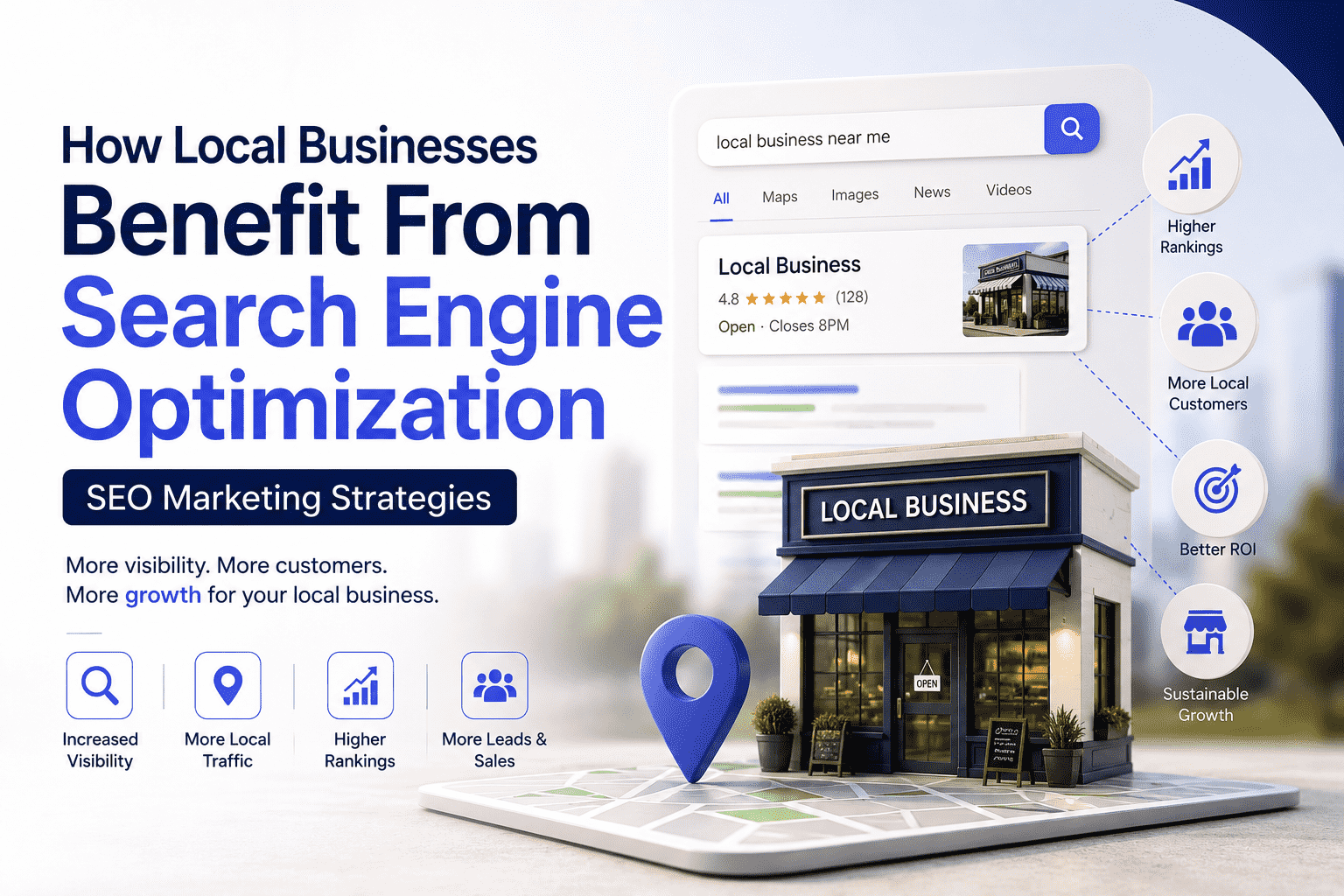
Local SEO focuses specifically on helping businesses appear in searches that have local intent.
For example, when someone searches for a nearby dentist, restaurant, electrician, lawyer, gym, or salon, search engines display businesses located close to the searcher.
Unlike traditional SEO, local optimization considers geographical relevance alongside website quality.
Businesses that depend on local customers typically benefit from Local SEO Services because visibility within their service area directly influences phone calls, appointments, store visits, and revenue.
Location-based optimization also helps businesses appear in map listings, local business profiles, and geographically targeted search results.
The Main Goals of SEO and Local SEO
Although both strategies improve online visibility, they solve different business problems.
Traditional SEO helps businesses:
- Reach broader audiences
- Increase national or international visibility
- Generate organic website traffic
- Build long-term topical authority
- Rank for competitive industry keywords
Local SEO focuses on helping businesses:
- Reach nearby customers
- Increase local inquiries
- Improve map visibility
- Generate phone calls and appointments
- Drive foot traffic to physical locations
The right strategy depends entirely on how and where your customers find your business.
Target Audience: The Biggest Difference
One of the most significant differences lies in audience targeting.
SEO attracts users regardless of where they are located. Someone searching from another city or even another country can discover your website if your content matches their search intent.
Local SEO narrows that audience considerably. It focuses on people searching within a defined service area or geographic region.
For example, a nationwide software provider benefits more from traditional SEO because customers can purchase from anywhere.
On the other hand, a local plumber only needs visibility among homeowners located within the cities they actually serve.
Understanding your customer base should always come before choosing your optimization strategy.
Ranking Factors Are Not the Same
Search engines evaluate different signals depending on whether a search has local intent.
Traditional SEO rankings depend heavily on factors such as:
High-quality content
Website authority
Backlink profile
Technical optimization
Page speed
User experience
Internal linking
Semantic relevance
Local SEO includes many of these factors but adds several location-specific signals, including business profile optimization, customer reviews, consistent business information, proximity to the searcher, local citations, and geographic relevance.
This is why two businesses with similar websites may rank very differently in local search results.
Content Strategy Also Changes
Content remains one of the strongest ranking factors for both SEO and local SEO, but the approach differs.
Traditional SEO often focuses on industry education, comprehensive guides, informational articles, and broad keyword topics that attract users from many locations.
Local SEO content typically incorporates city-specific service pages, local events, community involvement, regional case studies, and location-focused information that demonstrates relevance within a service area.
Both approaches prioritize helpful content, but the audience determines how that content is created.
When Should Your Business Choose SEO?
Traditional SEO is generally the better choice if your business:
Sells products nationwide
Offers online services
Targets customers across multiple regions
Operates an eCommerce website
Provides digital products
Competes in national markets
In these situations, geographic limitations are unnecessary because customers can engage with your business from virtually anywhere.
Building industry authority becomes more valuable than focusing on a single location.
When Is Local SEO the Better Option?
Businesses serving specific cities or regions often gain greater value from local optimization.
This includes industries such as healthcare, legal services, home improvement, restaurants, automotive repair, beauty salons, fitness centers, real estate agencies, accounting firms, and local contractors.
If customers typically search for businesses nearby before making a purchase, local visibility becomes one of your strongest competitive advantages.
Appearing in local search results often leads to higher conversion rates because searchers usually have immediate purchasing intent.
Can Businesses Benefit from Both Strategies?
Absolutely.
Many successful businesses combine traditional SEO with local optimization to maximize visibility.
For example, a law firm may publish educational legal articles targeting broader informational searches while simultaneously optimizing location-specific pages for the cities it serves.
Similarly, healthcare providers, multi-location businesses, franchise organizations, and regional service companies often benefit from using both approaches together.
Combining these strategies allows businesses to attract wider audiences while maintaining strong visibility within their primary service areas.
Common Mistakes Business Owners Make
Many businesses mistakenly assume that SEO automatically includes local optimization.
Others focus entirely on local rankings while ignoring valuable educational content that could establish long-term authority.
Some businesses create location pages without offering meaningful information, while others neglect technical website improvements because they rely solely on business profiles.
The most successful companies recognize that search optimization is not about choosing shortcuts. It is about aligning strategy with customer behavior and business goals.
Understanding where your audience searches—and what they expect to find—creates better long-term results than simply targeting popular keywords.
Final Thoughts
Choosing the right optimization strategy begins with understanding the difference between SEO and local SEO rather than assuming they are interchangeable. Businesses that serve customers nationwide typically benefit from broader organic visibility, while companies that depend on nearby customers achieve better results through location-focused optimization. By understanding the difference between SEO and local SEO, business owners can invest in the right strategy, attract more qualified customers, improve online visibility, and build sustainable growth that supports their long-term business objectives.
If you’re trying to grow your business online, understanding the difference between SEO and local SEO is one of the most important decisions you’ll make. Many business owners invest in digital marketing without realizing that these two strategies serve different purposes. Choosing the wrong approach can result in attracting the wrong audience, wasting marketing budgets, and missing valuable business opportunities.
Whether you own a local service business, a retail store, a healthcare practice, or an online company, knowing when to focus on SEO Services versus a location-based strategy can significantly impact your online visibility and lead generation. The good news is that once you understand how each works, selecting the right strategy becomes much easier.
Understanding the Difference Between SEO and Local SEO
The difference between SEO and local SEO comes down to who you’re trying to reach and where your customers are located.
SEO focuses on improving your website’s visibility for users searching nationally or globally. It helps businesses rank for industry-related keywords regardless of the searcher’s physical location.
Local SEO, however, is designed to help businesses appear in searches made by people within a specific geographic area. Instead of competing with every business nationwide, local optimization helps you connect with nearby customers who are actively looking for your products or services.
While both strategies aim to improve search visibility, their goals, ranking factors, and optimization techniques are quite different.
What Is SEO?
Search Engine Optimization (SEO) is the process of improving your website so that search engines can better understand, index, and rank your pages for relevant search queries.
The objective is to attract qualified visitors by creating valuable content, improving technical website performance, building authority through backlinks, and delivering an excellent user experience.
SEO works particularly well for businesses that serve customers across multiple cities, states, or even countries. Examples include software companies, eCommerce stores, online consultants, educational platforms, and national brands.
Rather than focusing on a physical location, SEO prioritizes relevance, authority, expertise, and content quality.
What Is Local SEO?
Local SEO focuses specifically on helping businesses appear in searches that have local intent.
For example, when someone searches for a nearby dentist, restaurant, electrician, lawyer, gym, or salon, search engines display businesses located close to the searcher.
Unlike traditional SEO, local optimization considers geographical relevance alongside website quality.
Businesses that depend on local customers typically benefit from Local SEO Services because visibility within their service area directly influences phone calls, appointments, store visits, and revenue.
Location-based optimization also helps businesses appear in map listings, local business profiles, and geographically targeted search results.
The Main Goals of SEO and Local SEO
Although both strategies improve online visibility, they solve different business problems.
Traditional SEO helps businesses:
- Reach broader audiences
- Increase national or international visibility
- Generate organic website traffic
- Build long-term topical authority
- Rank for competitive industry keywords
Local SEO focuses on helping businesses:
- Reach nearby customers
- Increase local inquiries
- Improve map visibility
- Generate phone calls and appointments
- Drive foot traffic to physical locations
The right strategy depends entirely on how and where your customers find your business.
Target Audience: The Biggest Difference
One of the most significant differences lies in audience targeting.
SEO attracts users regardless of where they are located. Someone searching from another city or even another country can discover your website if your content matches their search intent.
Local SEO narrows that audience considerably. It focuses on people searching within a defined service area or geographic region.
For example, a nationwide software provider benefits more from traditional SEO because customers can purchase from anywhere.
On the other hand, a local plumber only needs visibility among homeowners located within the cities they actually serve.
Understanding your customer base should always come before choosing your optimization strategy.
Ranking Factors Are Not the Same
Search engines evaluate different signals depending on whether a search has local intent.
Traditional SEO rankings depend heavily on factors such as:
High-quality content
Website authority
Backlink profile
Technical optimization
Page speed
User experience
Internal linking
Semantic relevance
Local SEO includes many of these factors but adds several location-specific signals, including business profile optimization, customer reviews, consistent business information, proximity to the searcher, local citations, and geographic relevance.
This is why two businesses with similar websites may rank very differently in local search results.
Content Strategy Also Changes
Content remains one of the strongest ranking factors for both SEO and local SEO, but the approach differs.
Traditional SEO often focuses on industry education, comprehensive guides, informational articles, and broad keyword topics that attract users from many locations.
Local SEO content typically incorporates city-specific service pages, local events, community involvement, regional case studies, and location-focused information that demonstrates relevance within a service area.
Both approaches prioritize helpful content, but the audience determines how that content is created.
When Should Your Business Choose SEO?
Traditional SEO is generally the better choice if your business:
Sells products nationwide
Offers online services
Targets customers across multiple regions
Operates an eCommerce website
Provides digital products
Competes in national markets
In these situations, geographic limitations are unnecessary because customers can engage with your business from virtually anywhere.
Building industry authority becomes more valuable than focusing on a single location.
When Is Local SEO the Better Option?
Businesses serving specific cities or regions often gain greater value from local optimization.
This includes industries such as healthcare, legal services, home improvement, restaurants, automotive repair, beauty salons, fitness centers, real estate agencies, accounting firms, and local contractors.
If customers typically search for businesses nearby before making a purchase, local visibility becomes one of your strongest competitive advantages.
Appearing in local search results often leads to higher conversion rates because searchers usually have immediate purchasing intent.
Can Businesses Benefit from Both Strategies?
Absolutely.
Many successful businesses combine traditional SEO with local optimization to maximize visibility.
For example, a law firm may publish educational legal articles targeting broader informational searches while simultaneously optimizing location-specific pages for the cities it serves.
Similarly, healthcare providers, multi-location businesses, franchise organizations, and regional service companies often benefit from using both approaches together.
Combining these strategies allows businesses to attract wider audiences while maintaining strong visibility within their primary service areas.
Common Mistakes Business Owners Make
Many businesses mistakenly assume that SEO automatically includes local optimization.
Others focus entirely on local rankings while ignoring valuable educational content that could establish long-term authority.
Some businesses create location pages without offering meaningful information, while others neglect technical website improvements because they rely solely on business profiles.
The most successful companies recognize that search optimization is not about choosing shortcuts. It is about aligning strategy with customer behavior and business goals.
Understanding where your audience searches—and what they expect to find—creates better long-term results than simply targeting popular keywords.
Final Thoughts
Choosing the right optimization strategy begins with understanding the difference between SEO and local SEO rather than assuming they are interchangeable. Businesses that serve customers nationwide typically benefit from broader organic visibility, while companies that depend on nearby customers achieve better results through location-focused optimization. By understanding the difference between SEO and local SEO, business owners can invest in the right strategy, attract more qualified customers, improve online visibility, and build sustainable growth that supports their long-term business objectives.