
Contact Us
Related Posts



























Categories
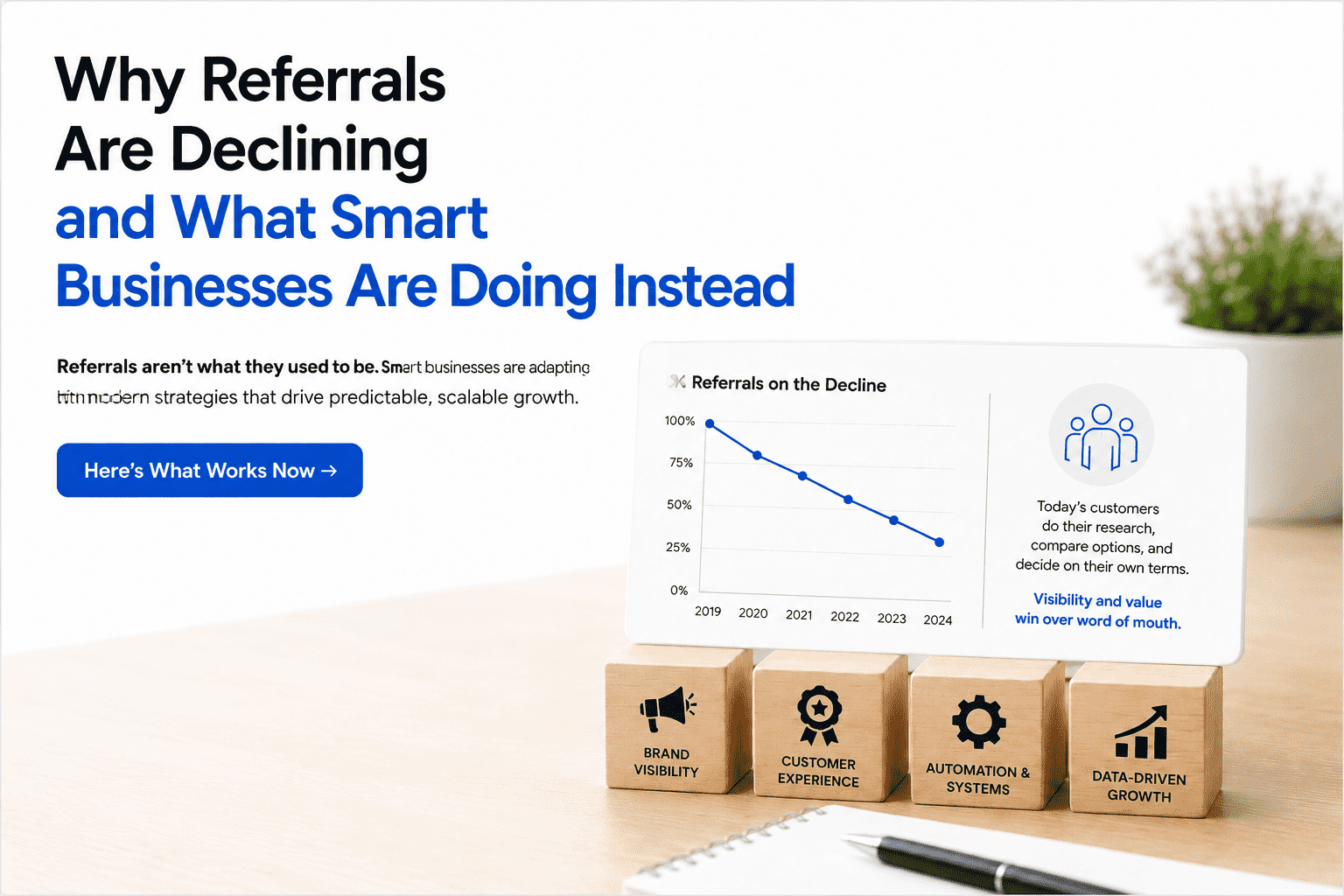
For years, referrals were considered one of the most reliable ways to win new customers. A recommendation from a friend, colleague, or existing client often carried more trust than any advertisement. Many companies built their growth strategies around word-of-mouth and enjoyed a steady stream of inquiries without investing heavily in marketing.
However, referral-driven growth is no longer as predictable as it once was. Customer behavior has changed, competition has increased, and buyers now conduct extensive research before making decisions. Even businesses with strong reputations are noticing that referrals alone are not generating enough opportunities to sustain long-term growth.
As a result, Smart Businesses are shifting their focus toward more scalable and measurable customer acquisition strategies that provide consistent results regardless of market conditions.
The Traditional Referral Model Is Losing Momentum
Referrals have not disappeared, but their effectiveness has declined for many organizations. One major reason is that purchasing decisions have become more complex. Buyers rarely make decisions based solely on a recommendation. Instead, they compare multiple providers, read reviews, visit websites, and evaluate online credibility before taking action.
Another challenge is that referral volume is difficult to control. A company can deliver excellent service and still experience periods where referrals slow down. Growth becomes dependent on factors outside the business’s direct control.
In addition, industries have become increasingly competitive. Potential customers now have access to dozens of alternatives within minutes. Even when a referral occurs, businesses must still compete for attention and trust throughout the decision-making process.
Why Modern Buyers Behave Differently
The customer journey has evolved significantly over the past decade. People are more informed than ever before and expect businesses to maintain a strong digital presence.
Before contacting a company, buyers often:
- Search online for solutions.
- Compare competitors.
- Read reviews and testimonials.
- Check social media activity.
- Evaluate websites and content.
- Look for proof of expertise.
This shift means referrals are frequently just the beginning of the buying journey rather than the final deciding factor. A recommendation may create awareness, but digital credibility is what often converts interest into a sale.
The Rise of Predictable Growth Channels
Businesses seeking sustainable growth are increasingly investing in channels that provide greater control over lead generation and customer acquisition.
Unlike referrals, modern marketing channels allow organizations to actively create demand rather than waiting for opportunities to appear. They also offer valuable performance data that helps companies understand what is working and where improvements can be made.
This transition is particularly important for organizations that want to scale consistently without relying on fluctuating referral networks.
How Smart Businesses Are Building Consistent Lead Pipelines
The companies achieving steady growth today are focusing on creating systems that generate qualified prospects continuously.
Instead of depending solely on word-of-mouth, they invest in visibility, audience engagement, and conversion-focused marketing strategies. Their goal is to ensure that potential customers can discover their business at every stage of the buying process.
These organizations understand that growth becomes more predictable when customer acquisition is supported by multiple channels rather than a single source of referrals.
Search Visibility Is Becoming a Competitive Advantage
When potential customers encounter a challenge, their first instinct is often to search online for answers. Businesses that appear prominently in search results gain an opportunity to establish trust before competitors enter the conversation.
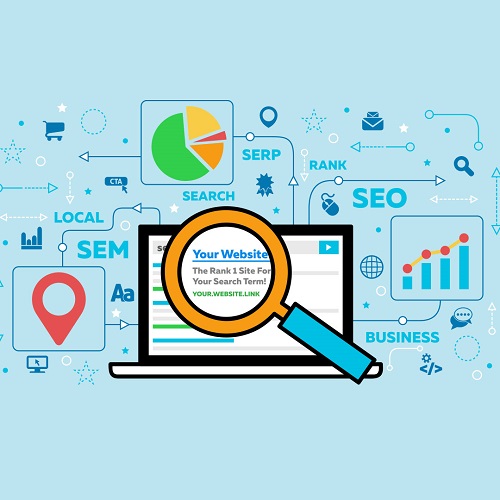
This is why many companies invest in SEO Services to improve their online visibility. By ranking for relevant searches, businesses can attract prospects who are actively looking for solutions rather than waiting for referrals to bring them opportunities.
Strong search visibility also creates a long-term asset that continues generating traffic and leads over time.
Paid Advertising Helps Capture Demand Faster
Organic visibility is important, but many businesses also want immediate access to potential customers. Paid advertising provides an effective way to reach qualified audiences quickly and drive targeted traffic.
Organizations often use PPC Services to place their offerings in front of prospects who are already searching for related products or services. This approach allows businesses to compete effectively, test new markets, and generate inquiries without relying on referral activity.
When managed correctly, paid campaigns can complement organic marketing efforts and accelerate growth.
Data-Driven Marketing Is Replacing Guesswork
Modern business growth is increasingly driven by measurable outcomes rather than assumptions. Leaders want clear insights into where leads originate, how prospects interact with their brand, and which campaigns generate the highest return.
This demand for accountability has increased interest in Performance Marketing Services, where success is measured through specific metrics such as leads, conversions, customer acquisition costs, and revenue impact.
Unlike referrals, which can be difficult to track accurately, performance-focused marketing provides detailed reporting that supports better business decisions.
Building Relationships Beyond Referrals
Trust remains essential in every buying decision, but businesses now have more ways to build credibility than traditional word-of-mouth alone.
Content marketing, customer success stories, educational resources, and consistent communication help organizations establish authority within their industries. Buyers often form opinions about a company long before speaking with a sales representative.
Businesses that invest in relationship-building across multiple touchpoints are often better positioned to convert prospects who may never receive a direct referral.
Social Platforms Are Influencing Purchase Decisions
Social media has become an important part of the research process for many buyers. Prospective customers often evaluate a company’s activity, expertise, and engagement before deciding whether to make contact.
As a result, organizations are increasingly leveraging Social Media Marketing Services to strengthen brand awareness and maintain visibility among their target audiences.
A consistent social presence helps businesses stay relevant, demonstrate expertise, and remain top-of-mind when potential customers are ready to make a decision.
Automation Is Helping Businesses Scale Efficiently
One challenge with referral-based growth is that it can be difficult to manage at scale. As businesses grow, they need systems that support consistent communication and lead nurturing.
Technology is helping solve this problem through automated marketing processes. For example, Marketing Automation for Coaching Centres enables educational organizations to engage prospective students, follow up efficiently, and maintain communication throughout the decision-making journey.
Automation reduces manual effort while creating a more consistent customer experience, allowing businesses to focus on growth without sacrificing quality.
Specialized Lead Generation Is Becoming More Important
Different industries require different approaches to customer acquisition. Generic marketing tactics often fail to produce meaningful results because buying behaviors vary significantly between sectors.
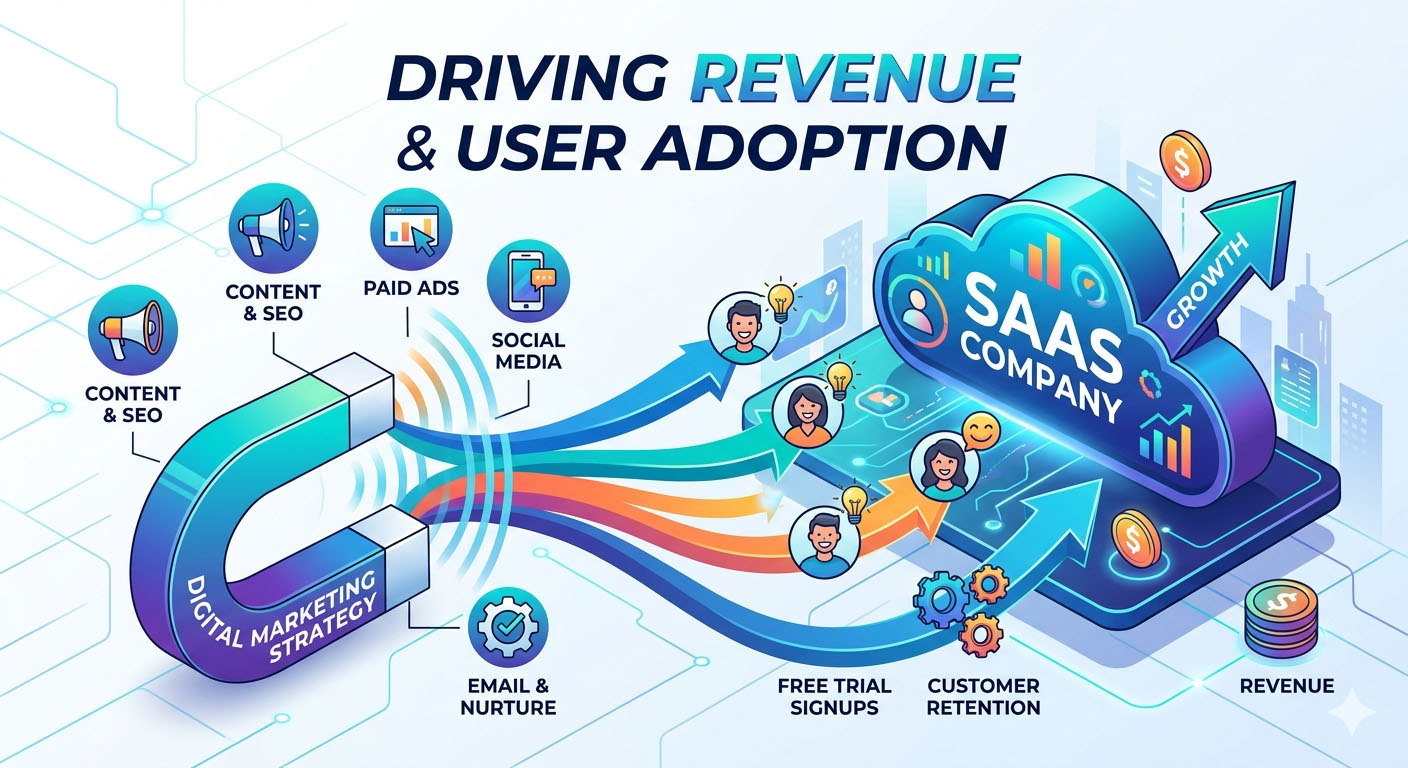
For example, Lead Generation for B2B SaaS Companies typically involves longer sales cycles, multiple decision-makers, and extensive evaluation processes. Businesses that understand these complexities are better equipped to create targeted strategies that attract qualified prospects and support sustainable growth.
Industry-specific marketing approaches are becoming increasingly valuable as competition continues to increase.
The Future Belongs to Businesses That Diversify Growth
Referrals will always have value. They create trust, strengthen credibility, and often lead to high-quality opportunities. However, relying exclusively on referrals is becoming increasingly risky in a market where customer behavior continues to evolve.
The most successful organizations are building diversified growth strategies that combine visibility, credibility, technology, and measurable marketing efforts. They recognize that sustainable growth comes from creating multiple pathways for customers to discover and engage with their brand.
As referral volumes become less predictable, Smart Businesses are investing in systems that generate opportunities consistently, provide actionable insights, and support long-term expansion. Rather than waiting for referrals to drive growth, Smart Businesses are taking control of customer acquisition and building scalable foundations for future success.

For years, referrals were considered one of the most reliable ways to win new customers. A recommendation from a friend, colleague, or existing client often carried more trust than any advertisement. Many companies built their growth strategies around word-of-mouth and enjoyed a steady stream of inquiries without investing heavily in marketing.
However, referral-driven growth is no longer as predictable as it once was. Customer behavior has changed, competition has increased, and buyers now conduct extensive research before making decisions. Even businesses with strong reputations are noticing that referrals alone are not generating enough opportunities to sustain long-term growth.
As a result, Smart Businesses are shifting their focus toward more scalable and measurable customer acquisition strategies that provide consistent results regardless of market conditions.
The Traditional Referral Model Is Losing Momentum
Referrals have not disappeared, but their effectiveness has declined for many organizations. One major reason is that purchasing decisions have become more complex. Buyers rarely make decisions based solely on a recommendation. Instead, they compare multiple providers, read reviews, visit websites, and evaluate online credibility before taking action.
Another challenge is that referral volume is difficult to control. A company can deliver excellent service and still experience periods where referrals slow down. Growth becomes dependent on factors outside the business’s direct control.
In addition, industries have become increasingly competitive. Potential customers now have access to dozens of alternatives within minutes. Even when a referral occurs, businesses must still compete for attention and trust throughout the decision-making process.
Why Modern Buyers Behave Differently
The customer journey has evolved significantly over the past decade. People are more informed than ever before and expect businesses to maintain a strong digital presence.
Before contacting a company, buyers often:
- Search online for solutions.
- Compare competitors.
- Read reviews and testimonials.
- Check social media activity.
- Evaluate websites and content.
- Look for proof of expertise.
This shift means referrals are frequently just the beginning of the buying journey rather than the final deciding factor. A recommendation may create awareness, but digital credibility is what often converts interest into a sale.
The Rise of Predictable Growth Channels
Businesses seeking sustainable growth are increasingly investing in channels that provide greater control over lead generation and customer acquisition.
Unlike referrals, modern marketing channels allow organizations to actively create demand rather than waiting for opportunities to appear. They also offer valuable performance data that helps companies understand what is working and where improvements can be made.
This transition is particularly important for organizations that want to scale consistently without relying on fluctuating referral networks.
How Smart Businesses Are Building Consistent Lead Pipelines
The companies achieving steady growth today are focusing on creating systems that generate qualified prospects continuously.
Instead of depending solely on word-of-mouth, they invest in visibility, audience engagement, and conversion-focused marketing strategies. Their goal is to ensure that potential customers can discover their business at every stage of the buying process.
These organizations understand that growth becomes more predictable when customer acquisition is supported by multiple channels rather than a single source of referrals.
Search Visibility Is Becoming a Competitive Advantage
When potential customers encounter a challenge, their first instinct is often to search online for answers. Businesses that appear prominently in search results gain an opportunity to establish trust before competitors enter the conversation.
This is why many companies invest in SEO Services to improve their online visibility. By ranking for relevant searches, businesses can attract prospects who are actively looking for solutions rather than waiting for referrals to bring them opportunities.
Strong search visibility also creates a long-term asset that continues generating traffic and leads over time.
Paid Advertising Helps Capture Demand Faster
Organic visibility is important, but many businesses also want immediate access to potential customers. Paid advertising provides an effective way to reach qualified audiences quickly and drive targeted traffic.
Organizations often use PPC Services to place their offerings in front of prospects who are already searching for related products or services. This approach allows businesses to compete effectively, test new markets, and generate inquiries without relying on referral activity.
When managed correctly, paid campaigns can complement organic marketing efforts and accelerate growth.
Data-Driven Marketing Is Replacing Guesswork
Modern business growth is increasingly driven by measurable outcomes rather than assumptions. Leaders want clear insights into where leads originate, how prospects interact with their brand, and which campaigns generate the highest return.
This demand for accountability has increased interest in Performance Marketing Services, where success is measured through specific metrics such as leads, conversions, customer acquisition costs, and revenue impact.
Unlike referrals, which can be difficult to track accurately, performance-focused marketing provides detailed reporting that supports better business decisions.
Building Relationships Beyond Referrals
Trust remains essential in every buying decision, but businesses now have more ways to build credibility than traditional word-of-mouth alone.
Content marketing, customer success stories, educational resources, and consistent communication help organizations establish authority within their industries. Buyers often form opinions about a company long before speaking with a sales representative.
Businesses that invest in relationship-building across multiple touchpoints are often better positioned to convert prospects who may never receive a direct referral.
Social Platforms Are Influencing Purchase Decisions
Social media has become an important part of the research process for many buyers. Prospective customers often evaluate a company’s activity, expertise, and engagement before deciding whether to make contact.
As a result, organizations are increasingly leveraging Social Media Marketing Services to strengthen brand awareness and maintain visibility among their target audiences.
A consistent social presence helps businesses stay relevant, demonstrate expertise, and remain top-of-mind when potential customers are ready to make a decision.
Automation Is Helping Businesses Scale Efficiently
One challenge with referral-based growth is that it can be difficult to manage at scale. As businesses grow, they need systems that support consistent communication and lead nurturing.
Technology is helping solve this problem through automated marketing processes. For example, Marketing Automation for Coaching Centres enables educational organizations to engage prospective students, follow up efficiently, and maintain communication throughout the decision-making journey.
Automation reduces manual effort while creating a more consistent customer experience, allowing businesses to focus on growth without sacrificing quality.
Specialized Lead Generation Is Becoming More Important
Different industries require different approaches to customer acquisition. Generic marketing tactics often fail to produce meaningful results because buying behaviors vary significantly between sectors.
For example, Lead Generation for B2B SaaS Companies typically involves longer sales cycles, multiple decision-makers, and extensive evaluation processes. Businesses that understand these complexities are better equipped to create targeted strategies that attract qualified prospects and support sustainable growth.
Industry-specific marketing approaches are becoming increasingly valuable as competition continues to increase.
The Future Belongs to Businesses That Diversify Growth
Referrals will always have value. They create trust, strengthen credibility, and often lead to high-quality opportunities. However, relying exclusively on referrals is becoming increasingly risky in a market where customer behavior continues to evolve.
The most successful organizations are building diversified growth strategies that combine visibility, credibility, technology, and measurable marketing efforts. They recognize that sustainable growth comes from creating multiple pathways for customers to discover and engage with their brand.
As referral volumes become less predictable, Smart Businesses are investing in systems that generate opportunities consistently, provide actionable insights, and support long-term expansion. Rather than waiting for referrals to drive growth, Smart Businesses are taking control of customer acquisition and building scalable foundations for future success.