Contact Us

Services

Related Posts

Categories

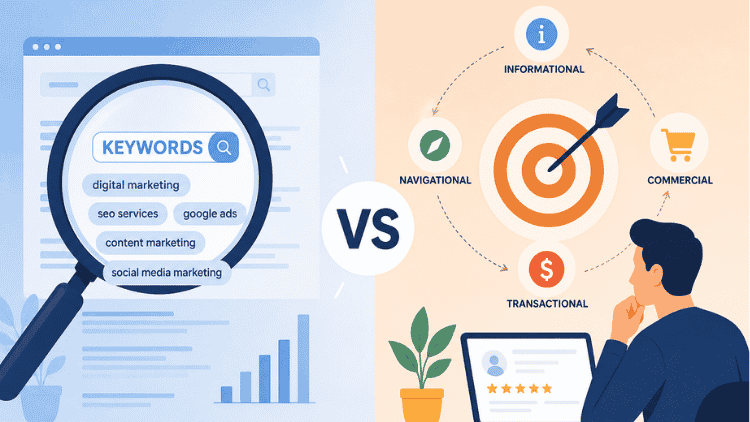
Search Intent vs Keywords

Search engine optimization has changed significantly over the years. There was a time when ranking on Google was mostly about using the right keywords in your content. Businesses focused on keyword density, exact match phrases, and stuffing pages with search terms.

That approach no longer works.

Today, Google is smarter. It understands context, meaning, and user behavior. Instead of just matching keywords, it tries to understand what the user actually wants.

This is where the concept of search intent becomes critical.

If you are still focusing only on keywords without understanding intent, you are likely missing out on rankings, traffic, and conversions.

Let’s break down the difference between search intent vs keywords and what really matters for SEO in 2026.

What Are Keywords in SEO

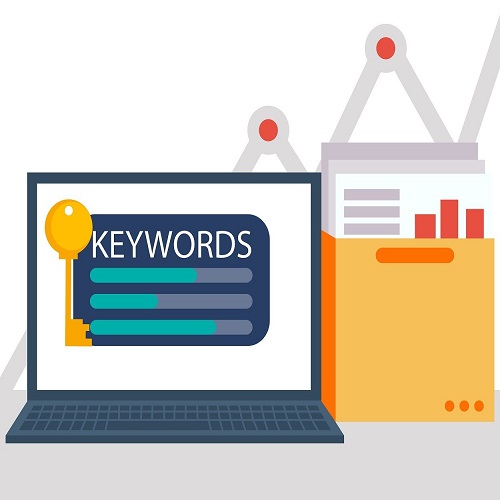
Keywords are the words or phrases people type into search engines.

For example:

  • digital marketing services
  • google ads agency
  • best SEO company

These keywords help search engines understand what your content is about.

For years, SEO strategies were built around finding high-volume keywords and placing them in titles, headings, and content.

While keywords are still important, they are no longer the main factor.

What Is Search Intent

Search intent refers to the reason behind a user’s search.

It answers the question:
Why is someone searching this?

For example:

  • Someone searching “what is SEO” wants information
  • Someone searching “SEO services company” wants to hire a service
  • Someone searching “best SEO tools” wants to compare options

Even though these are all SEO-related keywords, the intent behind each is completely different.

Google prioritizes content that matches intent, not just keywords.

Types of Search Intent

Understanding intent helps you create content that actually ranks and converts.

1. Informational Intent

Users are looking for information.

Example:

  • what is digital marketing
  • how google ads works

Content needed: blogs, guides, educational content


2. Navigational Intent

Users want to find a specific website or brand.

Example:

  • Facebook login
  • Semrush pricing

Content needed: brand pages


3. Commercial Intent

Users are researching before making a decision.

Example:

  • best SEO agency
  • top marketing companies

Content needed: comparison blogs, reviews


4. Transactional Intent

Users are ready to take action.

Example:

  • hire SEO agency
  • google ads services

Content needed: service pages and landing pages

Search Intent vs Keywords: The Real Difference

Keywords tell you what people are searching.

Search intent tells you why they are searching.

This difference is crucial.

If you target a keyword without understanding intent, your content may not rank or convert.

For example:

If someone searches
“google ads services”

and your page is a blog explaining how ads work instead of offering services, it will not perform well.

But if your page is optimized as a service page like Google Ads Services, it aligns with the user’s intent and performs better.

Why Search Intent Matters More in 2026

Google’s algorithms are now built to prioritize user experience and satisfaction.

Here’s why intent matters more than ever:

1. Google Understands Context Better

With AI and machine learning, Google can interpret meaning beyond exact keywords.

2. User Experience Signals Matter

Bounce rate, time on page, and engagement tell Google if your content satisfies intent.

3. AI Search Is Growing

Search results are becoming more conversational and answer-focused, making intent even more important.

4. Competition Is Increasing

More websites are targeting the same keywords. Only those matching intent rank higher.

Common Mistake: Keyword-Focused Content Without Intent

Many businesses still create content like this:

  • Choose a keyword
  • Write content around it
  • Add the keyword multiple times

But they ignore:

  • What the user actually wants
  • Whether the content solves the problem
  • Whether it leads to conversion

This results in:

  • Low rankings
  • High bounce rates
  • Poor lead generation

How to Identify Search Intent

Before creating content, you should always analyze intent.

Here are simple ways to do it:

1. Check Google Search Results

Search your keyword and see what type of content ranks:

  • Blogs
  • Service pages
  • Product pages

Google is already showing what works.


2. Look at Titles and Headlines

If most results are “Top 10” or “Best” articles, it is commercial intent.

If results are guides or definitions, it is informational.


3. Analyze User Behavior

Ask:

  • What problem is the user trying to solve
  • Are they researching or buying

How to Optimize Content for Search Intent

Once you understand intent, your content strategy becomes much stronger.

1. Match Content Type with Intent

  • Informational → Blogs
  • Commercial → Comparison pages
  • Transactional → Service pages


2. Use Keywords Naturally

Keywords should support your content, not control it.

Instead of forcing keywords, focus on clarity and relevance.


3. Create Clear Structure

Your content should:

  • Answer the query quickly
  • Provide detailed information
  • Guide users to next action


4. Add Conversion Paths

If your content has commercial or transactional intent, guide users toward action.

For example, if someone is looking for marketing services, your content should naturally lead to Digital Marketing Services or SEO Services.

Balancing Search Intent and Keywords

It is not about choosing one over the other.

The best SEO strategy combines both.

Think of it like this:

  • Keywords = direction
  • Intent = destination

You need both to succeed.

Real Example

Keyword: search intent vs keywords

Possible intent:

  • Understand the difference
  • Learn SEO strategy
  • Improve website rankings

So the content should:

  • Explain both concepts
  • Compare them clearly
  • Provide actionable insights

This is exactly how you align keyword + intent.

How This Impacts Lead Generation

When your content matches intent:

  • You attract the right audience
  • Users stay longer on your site
  • Conversion rates improve
  • Lead quality increases

This is why businesses focusing on intent-driven SEO generate better results.

Final Thoughts

Search intent vs keywords is not a debate where one replaces the other.

Keywords are still important, but they are only the starting point.

Search intent is what determines whether your content will rank, engage users, and generate results.

In 2026, SEO is no longer about stuffing keywords into content. It is about understanding users, solving problems, and delivering value.

If your content matches what users are truly looking for, Google will reward you.

And more importantly, your audience will too.

Travel bookingHow Travel Businesses Can Generate More Bookings Online
Search Intent vs Keywords

Search engine optimization has changed significantly over the years. There was a time when ranking on Google was mostly about using the right keywords in your content. Businesses focused on keyword density, exact match phrases, and stuffing pages with search terms.

That approach no longer works.

Today, Google is smarter. It understands context, meaning, and user behavior. Instead of just matching keywords, it tries to understand what the user actually wants.

This is where the concept of search intent becomes critical.

If you are still focusing only on keywords without understanding intent, you are likely missing out on rankings, traffic, and conversions.

Let’s break down the difference between search intent vs keywords and what really matters for SEO in 2026.

What Are Keywords in SEO

Keywords are the words or phrases people type into search engines.

For example:

  • digital marketing services
  • google ads agency
  • best SEO company

These keywords help search engines understand what your content is about.

For years, SEO strategies were built around finding high-volume keywords and placing them in titles, headings, and content.

While keywords are still important, they are no longer the main factor.

What Is Search Intent

Search intent refers to the reason behind a user’s search.

It answers the question:
Why is someone searching this?

For example:

  • Someone searching “what is SEO” wants information
  • Someone searching “SEO services company” wants to hire a service
  • Someone searching “best SEO tools” wants to compare options

Even though these are all SEO-related keywords, the intent behind each is completely different.

Google prioritizes content that matches intent, not just keywords.

Types of Search Intent

Understanding intent helps you create content that actually ranks and converts.

1. Informational Intent

Users are looking for information.

Example:

  • what is digital marketing
  • how google ads works

Content needed: blogs, guides, educational content


2. Navigational Intent

Users want to find a specific website or brand.

Example:

  • Facebook login
  • Semrush pricing

Content needed: brand pages


3. Commercial Intent

Users are researching before making a decision.

Example:

  • best SEO agency
  • top marketing companies

Content needed: comparison blogs, reviews


4. Transactional Intent

Users are ready to take action.

Example:

  • hire SEO agency
  • google ads services

Content needed: service pages and landing pages

Search Intent vs Keywords: The Real Difference

Keywords tell you what people are searching.

Search intent tells you why they are searching.

This difference is crucial.

If you target a keyword without understanding intent, your content may not rank or convert.

For example:

If someone searches
“google ads services”

and your page is a blog explaining how ads work instead of offering services, it will not perform well.

But if your page is optimized as a service page like Google Ads Services, it aligns with the user’s intent and performs better.

Why Search Intent Matters More in 2026

Google’s algorithms are now built to prioritize user experience and satisfaction.

Here’s why intent matters more than ever:

1. Google Understands Context Better

With AI and machine learning, Google can interpret meaning beyond exact keywords.

2. User Experience Signals Matter

Bounce rate, time on page, and engagement tell Google if your content satisfies intent.

3. AI Search Is Growing

Search results are becoming more conversational and answer-focused, making intent even more important.

4. Competition Is Increasing

More websites are targeting the same keywords. Only those matching intent rank higher.

Common Mistake: Keyword-Focused Content Without Intent

Many businesses still create content like this:

  • Choose a keyword
  • Write content around it
  • Add the keyword multiple times

But they ignore:

  • What the user actually wants
  • Whether the content solves the problem
  • Whether it leads to conversion

This results in:

  • Low rankings
  • High bounce rates
  • Poor lead generation

How to Identify Search Intent

Before creating content, you should always analyze intent.

Here are simple ways to do it:

1. Check Google Search Results

Search your keyword and see what type of content ranks:

  • Blogs
  • Service pages
  • Product pages

Google is already showing what works.


2. Look at Titles and Headlines

If most results are “Top 10” or “Best” articles, it is commercial intent.

If results are guides or definitions, it is informational.


3. Analyze User Behavior

Ask:

  • What problem is the user trying to solve
  • Are they researching or buying

How to Optimize Content for Search Intent

Once you understand intent, your content strategy becomes much stronger.

1. Match Content Type with Intent

  • Informational → Blogs
  • Commercial → Comparison pages
  • Transactional → Service pages


2. Use Keywords Naturally

Keywords should support your content, not control it.

Instead of forcing keywords, focus on clarity and relevance.


3. Create Clear Structure

Your content should:

  • Answer the query quickly
  • Provide detailed information
  • Guide users to next action


4. Add Conversion Paths

If your content has commercial or transactional intent, guide users toward action.

For example, if someone is looking for marketing services, your content should naturally lead to Digital Marketing Services or SEO Services.

Balancing Search Intent and Keywords

It is not about choosing one over the other.

The best SEO strategy combines both.

Think of it like this:

  • Keywords = direction
  • Intent = destination

You need both to succeed.

Real Example

Keyword: search intent vs keywords

Possible intent:

  • Understand the difference
  • Learn SEO strategy
  • Improve website rankings

So the content should:

  • Explain both concepts
  • Compare them clearly
  • Provide actionable insights

This is exactly how you align keyword + intent.

How This Impacts Lead Generation

When your content matches intent:

  • You attract the right audience
  • Users stay longer on your site
  • Conversion rates improve
  • Lead quality increases

This is why businesses focusing on intent-driven SEO generate better results.

Final Thoughts

Search intent vs keywords is not a debate where one replaces the other.

Keywords are still important, but they are only the starting point.

Search intent is what determines whether your content will rank, engage users, and generate results.

In 2026, SEO is no longer about stuffing keywords into content. It is about understanding users, solving problems, and delivering value.

If your content matches what users are truly looking for, Google will reward you.

And more importantly, your audience will too.

Contact Us

Services

Related Posts

Category