
Contact Us
Related Posts
















































Categories
 AI Visibility for Hotels: Getting Recommended by ChatGPT, Gemini, and Perplexity Trip Planners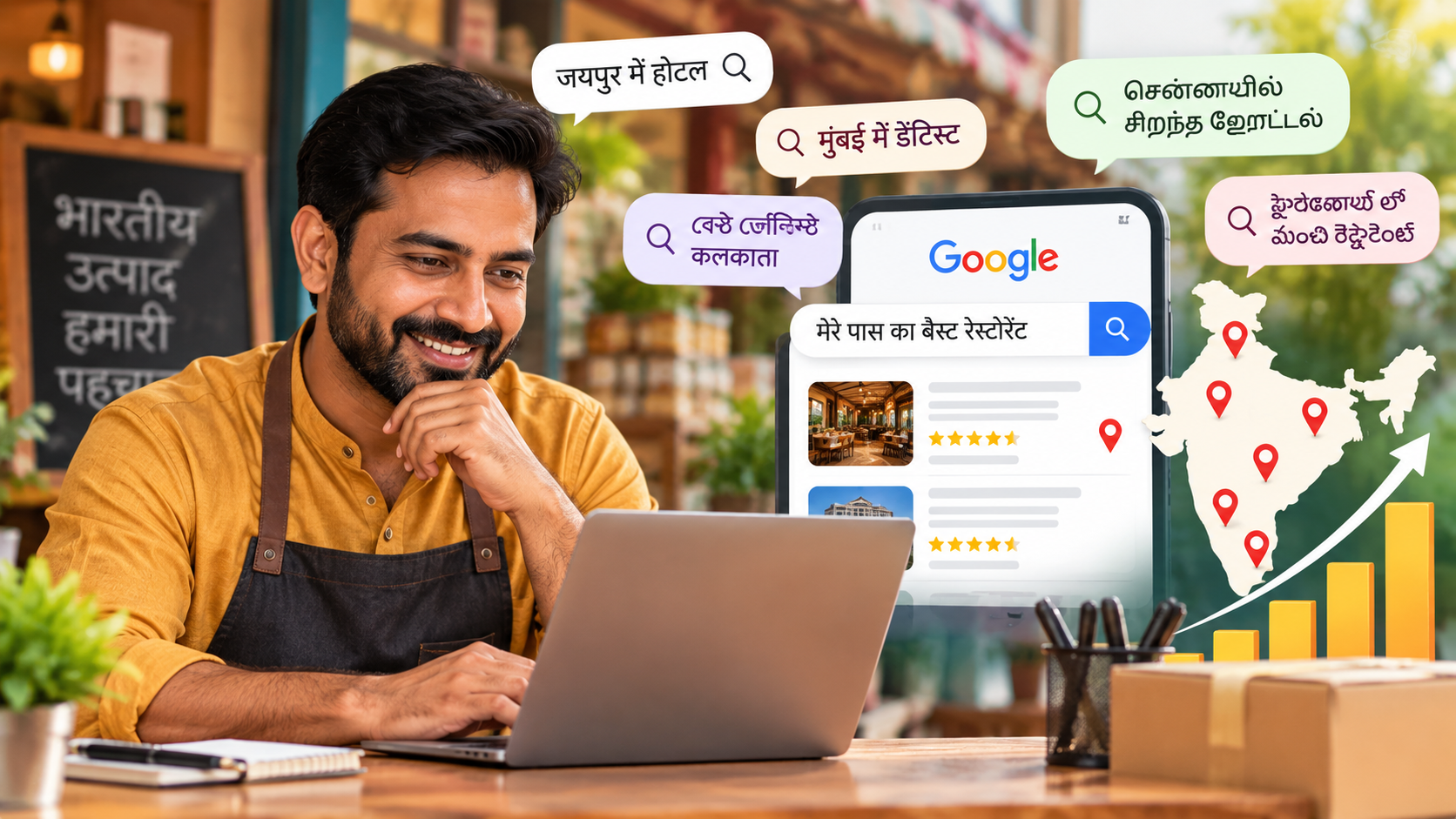
If your website is only in English, you are speaking to a smaller slice of India than you think. India had about 886 million active internet users in 2024, and rural India, which is 488 million of them, now makes up 55% of the total, according to the IAMAI and Kantar Internet in India Report 2024. The same report found that 98% of users accessed content in Indian languages, and 57% of urban users prefer regional-language content.
So the real question is no longer whether Hindi and vernacular search exist. It is whether investing in them will pay back for your business. This guide gives you a straight answer, a way to decide, and a practical plan if the answer is yes.
What is Hindi and vernacular SEO?
Vernacular SEO means optimising your website, Google Business Profile and content so that people can find you when they search in their own language, whether that is Hindi, Marathi, Tamil, Bengali, Gujarati or another Indian language.
It is not just translating your English pages. It covers:
- Keyword research in the language people actually use, including Devanagari script and romanised “Hinglish” queries such as “dentist near me kitne ka hota hai”.
- Native-quality content written for Hindi readers, not machine-translated from English.
- Technical setup so Google understands which page is meant for which language.
- Local signals such as a Hindi business description and Hindi reviews on your Google profile.
If you are new to the basics, start with our overview of SEO services and then come back to the language layer.
Why it matters now
1. Your next customers are increasingly non-English first. Growth in Indian internet use is led by rural and smaller-town users, and mobile is the main way people get online. Google’s own Year in Search 2020 India report said that around 90% of Indian internet users prefer to search and complete tasks in their local language, and described voice, video and vernacular as the three forces shaping how Indians use the web. That figure is a few years old, but the direction has only strengthened.
2. There is a content gap. Older Think with Google research highlighted how few websites were in Hindi compared with the number of Hindi speakers. The exact share has certainly changed since, but in many local-service categories, Hindi search results are still thin, which means less competition for you.
3. AI search is making language a bigger factor. AI Overviews and chatbots answer in the language of the question. If nobody has published a good Hindi answer about your service, you are not in the running. We covered the wider effect in How Much Traffic Do Indian SMEs Actually Lose to AI Overviews? and in AI Search or Google Search in 2026: Which One Brings More Leads?. Our Answer Engine Optimization service builds on the same principle: clear, well-structured answers in the language the customer uses.
Is it worth it for your business?
It depends on who buys from you and how they search. Use this as a quick filter.
It is usually worth it if:
- You serve customers in Hindi-speaking states or in tier-2 and tier-3 cities, as with clinics, coaching institutes, schools, hotels, property dealers, packers and movers, or repair and home services. See how this applies to healthcare SEO, coaching institute SEO and digital marketing for small businesses.
- Your buyers are individuals or families making a local decision, and they ask questions in conversational language or by voice.
- Your English keywords are expensive or crowded, but nobody has properly covered the Hindi versions.
- You sell products through e-commerce to a mass-market audience that browses in Hindi on mobile.
It is usually not a priority if:
- You sell B2B software or services to English-speaking decision makers.
- Your customers are mostly metro professionals who search in English.
- You have not yet fixed the basics (site speed, indexing, a good Google Business Profile). Do those first.
A useful rule: if your sales team or front desk already talks to customers in Hindi, your website probably should too.
How to check demand before you invest
You do not need to guess. A one-week test will tell you most of what you need:
- Search your own services in Hindi and Hinglish on your phone, and look at who shows up. Weak or empty results are an opportunity.
- Check Google Search Console. Filter queries for Hindi characters or common Hinglish words and see if you already get impressions.
- Look at Google autosuggest and “People also ask” for Hindi versions of your top service terms.
- Ask your sales or support team what language leads use on calls and WhatsApp.
- Review your Google Ads search terms. If you run Google Ads, the search terms report often shows Hinglish queries converting already.
A practical Hindi SEO plan
1. Start with a pilot, not a full translation
Pick your 5 to 10 highest-value service or product pages and build Hindi versions of those first. Measure leads and calls for a few months before expanding.
2. Do keyword research the way customers talk
People type in Devanagari, in romanised Hindi, and in a mix with English. Collect all three. For example, a customer might search “दांत का डॉक्टर”, “dant ka doctor” or “dentist for root canal sasta”. Build pages and headings around the forms that show real search volume or conversions, not the ones that look neat.
3. Write, do not just translate
Machine translation often produces stiff, formal Hindi that nobody speaks. Have a native writer adapt the content: use everyday vocabulary, local examples, and the English terms people already use (like “EMI”, “admission” or “AC”). Keep the facts, prices and calls to action identical to your English page.
4. Set up the technical side correctly
- Give each language its own URL, for example
/hi/or a clear Hindi subfolder. Avoid swapping language on the same URL with a script. - Add
hreflangtags (such ashi-INanden-IN) so Google knows how the versions relate. - Use a font that renders well on low-end phones and keep pages light. Speed matters even more for the mobile-first, lower-bandwidth audience you are targeting.
- Translate titles, meta descriptions, image alt text and schema markup, not only the body text.
- If you run WordPress, choose a multilingual setup that keeps URLs clean. Our WordPress SEO services and web development team handle this regularly.
5. Localise your Google Business Profile
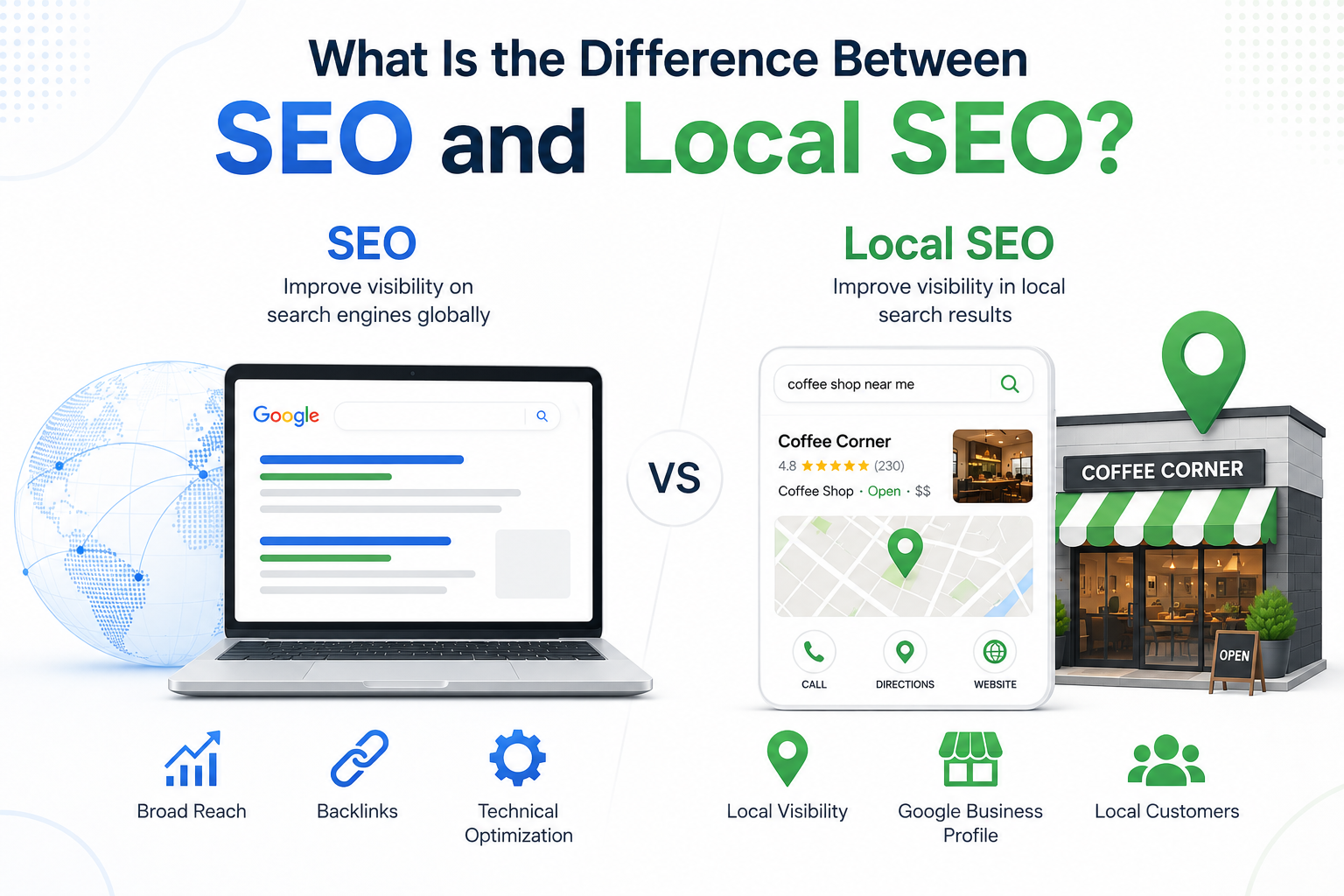
For local businesses, this is often the fastest win. Add a Hindi description, answer questions in Hindi, post updates in Hindi, and encourage customers to leave reviews in whichever language they prefer. Then work on the signals that decide visibility in the map results, which we explain in What Is Google’s Local Pack and How Do You Rank in It?. If you manage several branches, see our multi-location SEO approach. And if you are unsure how this differs from regular SEO, read What Is the Difference Between SEO and Local SEO?
6. Write for voice and conversational questions
Vernacular searchers lean on voice and on full questions. Add short question-and-answer sections to your pages (“कितना खर्च आता है?”, “कितना समय लगता है?”) with direct, two-to-three sentence answers. This also helps your chances in featured snippets and AI-generated answers.
7. Support it with the right content mix
Video and short-form content perform well with vernacular audiences, so pair your Hindi pages with Hindi YouTube and Reels content. Our guides on short-form vs long-form content and types of content strategy can help you decide the mix.
Common mistakes to avoid
- Translating everything at once and then having no budget to maintain it.
- Using only formal, textbook Hindi while customers search in casual or mixed language.
- Ignoring Hinglish. In many categories, romanised queries bring more traffic than Devanagari ones.
- Duplicating pages without hreflang, which can confuse which version should rank.
- Not tracking Hindi pages separately in Analytics and Search Console, so you cannot tell whether the effort works.
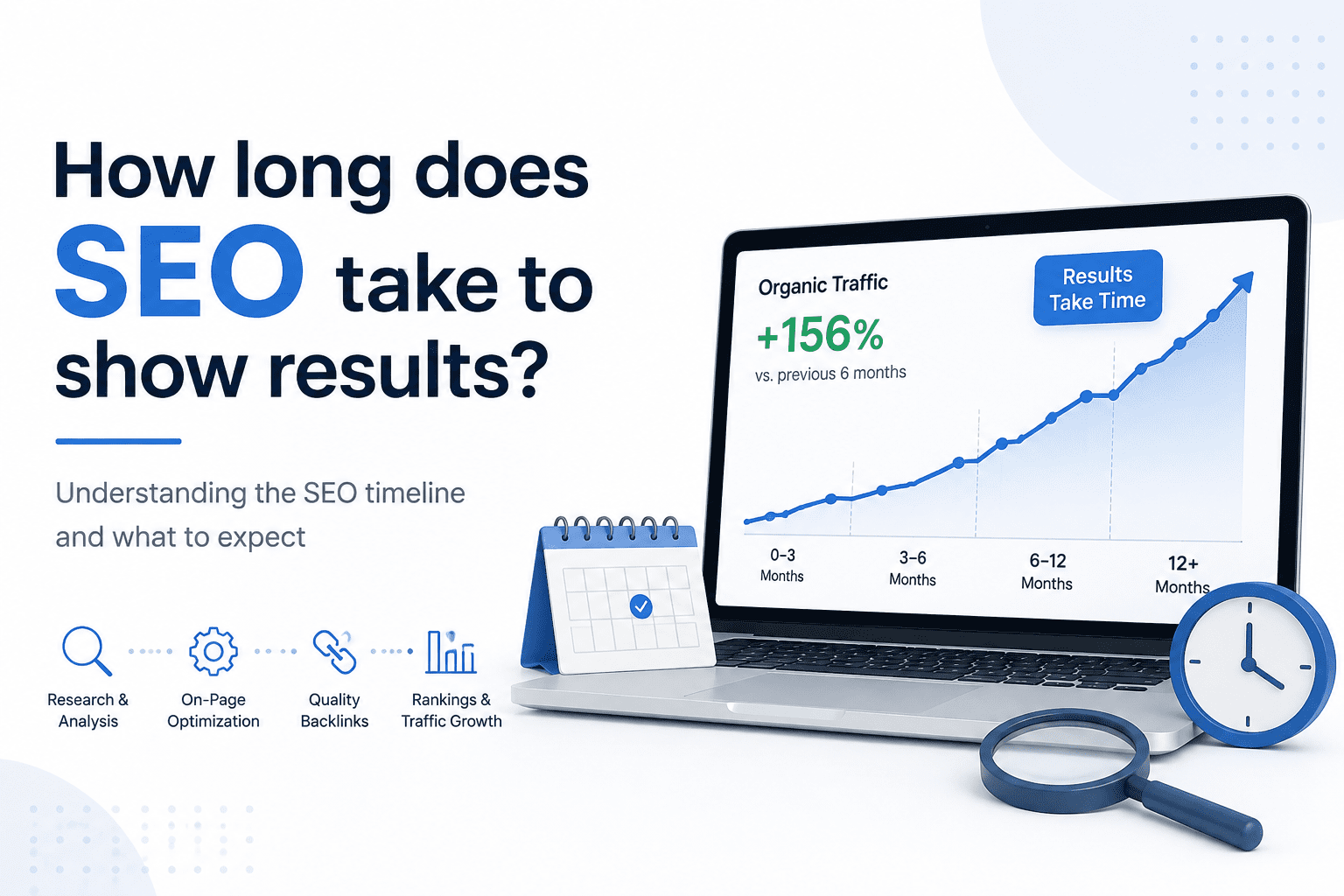
- Expecting overnight results. Hindi pages follow the same timeline as any new SEO work. See How Long Does SEO Take to Show Results?
How to measure whether it is working
Track these separately for your Hindi pages: impressions and clicks in Search Console, calls and WhatsApp clicks from the Hindi Google Business Profile, form fills from Hindi landing pages, and the share of new leads who speak Hindi. If after about six months the Hindi section is bringing qualified leads at a lower cost than your English pages, expand it. If it is not, you will have learned that cheaply, because you started with a pilot.
Frequently asked questions
Does Hindi SEO work on Google? Yes. Google indexes and ranks Hindi content, and offers search, voice search and Maps in Hindi and other Indian languages. The work is similar to English SEO, but keywords, content style and technical setup need a language-specific approach.
Should I write in Devanagari or Hinglish? Check your data. Many sites do best with Devanagari for page content and with Hinglish terms naturally included in headings, FAQs and metadata where search behaviour supports it.
Is Google Translate enough for a Hindi website? It is fine for a first draft, but not for publishing. Have a native speaker edit it so it reads naturally and uses the vocabulary your customers use.
Will a Hindi version hurt my English rankings? Not if it is set up properly, with separate URLs and hreflang tags. Done correctly, the two versions serve different audiences.
How much does vernacular SEO cost? It varies with the number of pages, languages and the level of content writing needed. A small pilot of 5 to 10 pages is a sensible way to start.
The bottom line
For businesses that serve everyday Indian customers, Hindi and vernacular SEO is usually worth testing, because demand is large, mobile-first and growing outside the metros, and many search results are still under-served. For English-only B2B buyers, it can wait. Either way, validate with data first, start with a focused pilot, and invest in natural, locally written content rather than literal translation.
Want to know whether Hindi or regional-language SEO makes sense for your business? Talk to the OMR Digital team for a quick opportunity check.